When we were in our 20s we had the opportunity to take a Christmas Market Cruise along the Danube. It changed my life forever. It was one of the first trips I’d taken out of the US and I fell in love with the little towns and their festive Markets. I’ve always wanted to go back and spend some time in the Area. And so the plan for this trip is to do that.
Mon
Tue
Wed
Thu
Fri
Sat
Sun
Fly to Germany
Arrive in Germany
Nuremburg
Nuremburg Day Trip to Regensburg
Nuremburg
Munich
Fly Home
Day 0
Fly to Germany
Day 1
Arrive in Germany
Arriving in Munich, we’ll immediately take a transfer and make our way to Nuremburg thru Amberg.
Booking a private driving tour of the Appian Way or hidden Rome, staying mostly in the car with optional short stops (catacombs, aqueduct park views, or Piazzas)
We’ll Check in at our hotel, Hotel Mancino 12, and relax for a bit.
evening – WALK & Dinner
Then lets start our special time in Rome with a rooftop drink at Notos to start the evening off!
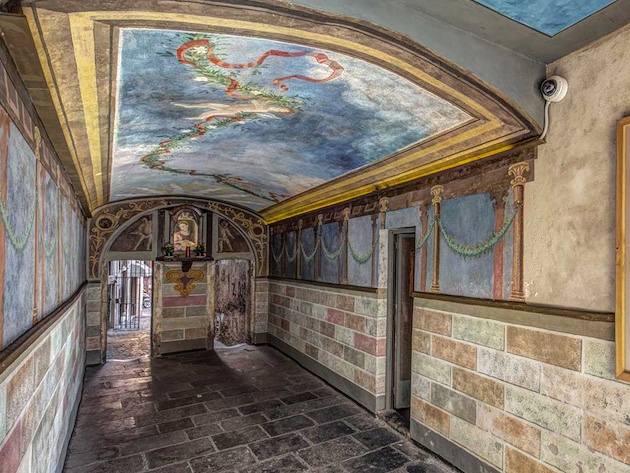
Around the corner we’ll check out to the Galleria Sciarra (closes at 8pm)
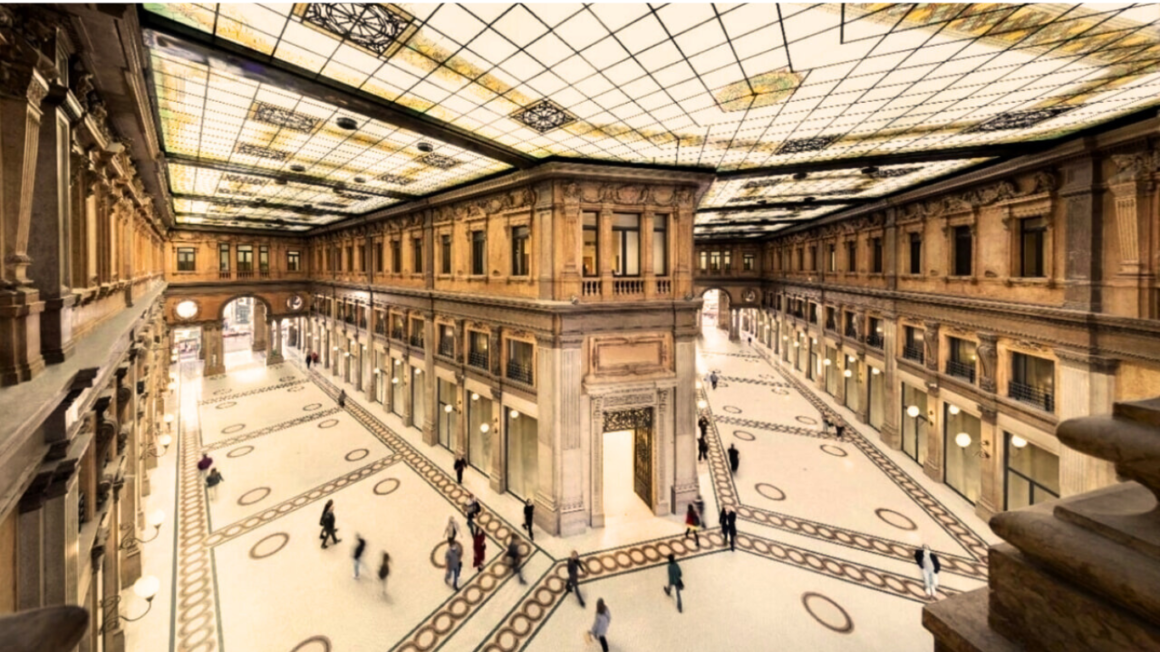
Then a trip by another famous stop, Galleria Alberto Sordi (closes at 8PM), across from the Piazza Colonna with the marble Column of Marcus Aurelius which was erected in AD193.
Finishing the short walk for dinner at Il Vicolo Nel Corso and then back to our hotel.
Day 2 – Rome
Morning – Walk
We’ll start our day off with Breakfast at Hedera – Osteria Contemporanea. From there We’ll take a walk to:
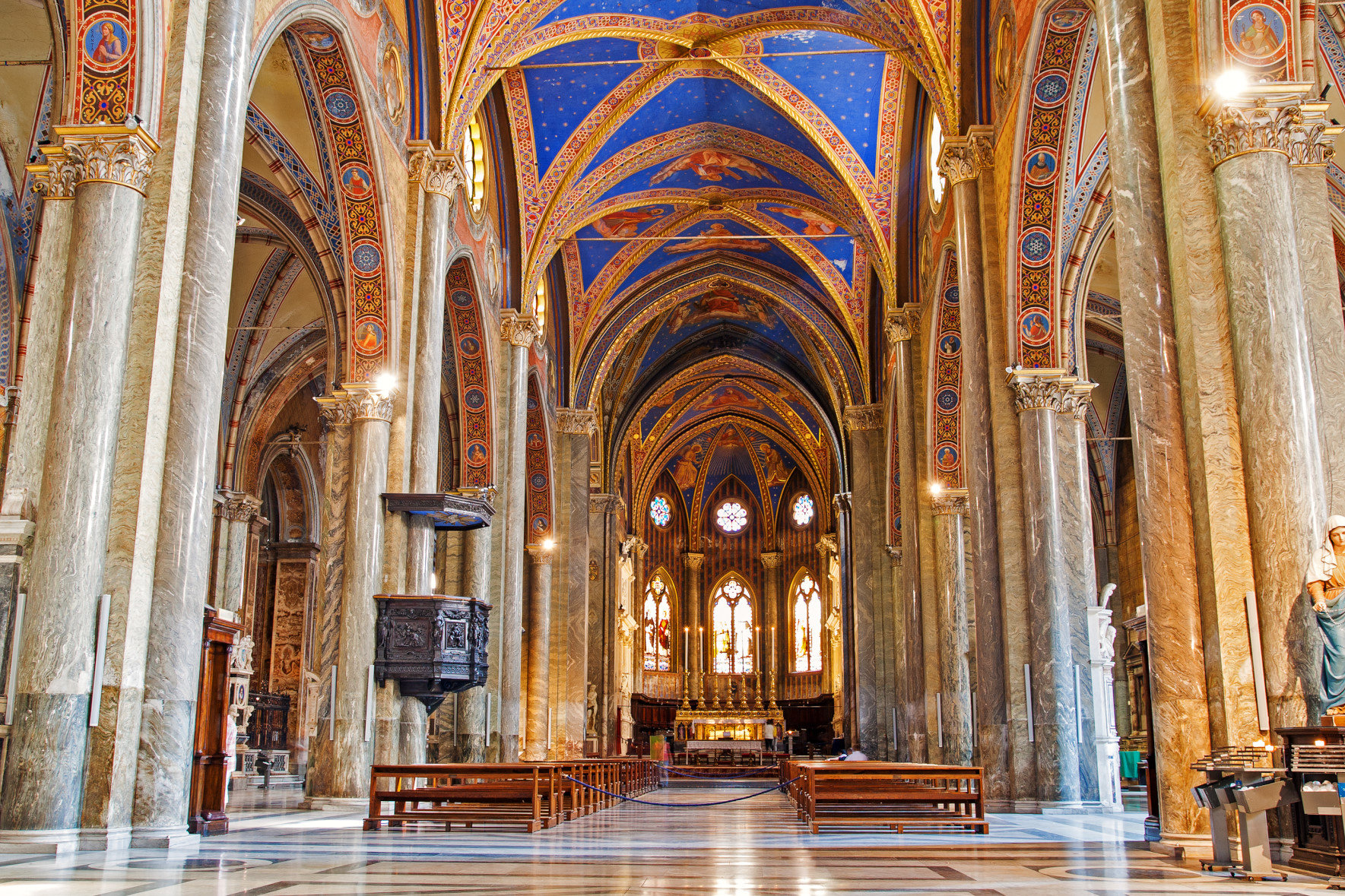
Basilica of Saint Mary of Minerva (10:30 – 1) – see if you can get into the closter next door at the Il Chiostro di Santa Maria Sopra Minerva. Entrance is to the left of the Church.
2. Pantheon
3. Church of Saint Louis of the French – Cappella Contarelli (9:30 – 12:15)
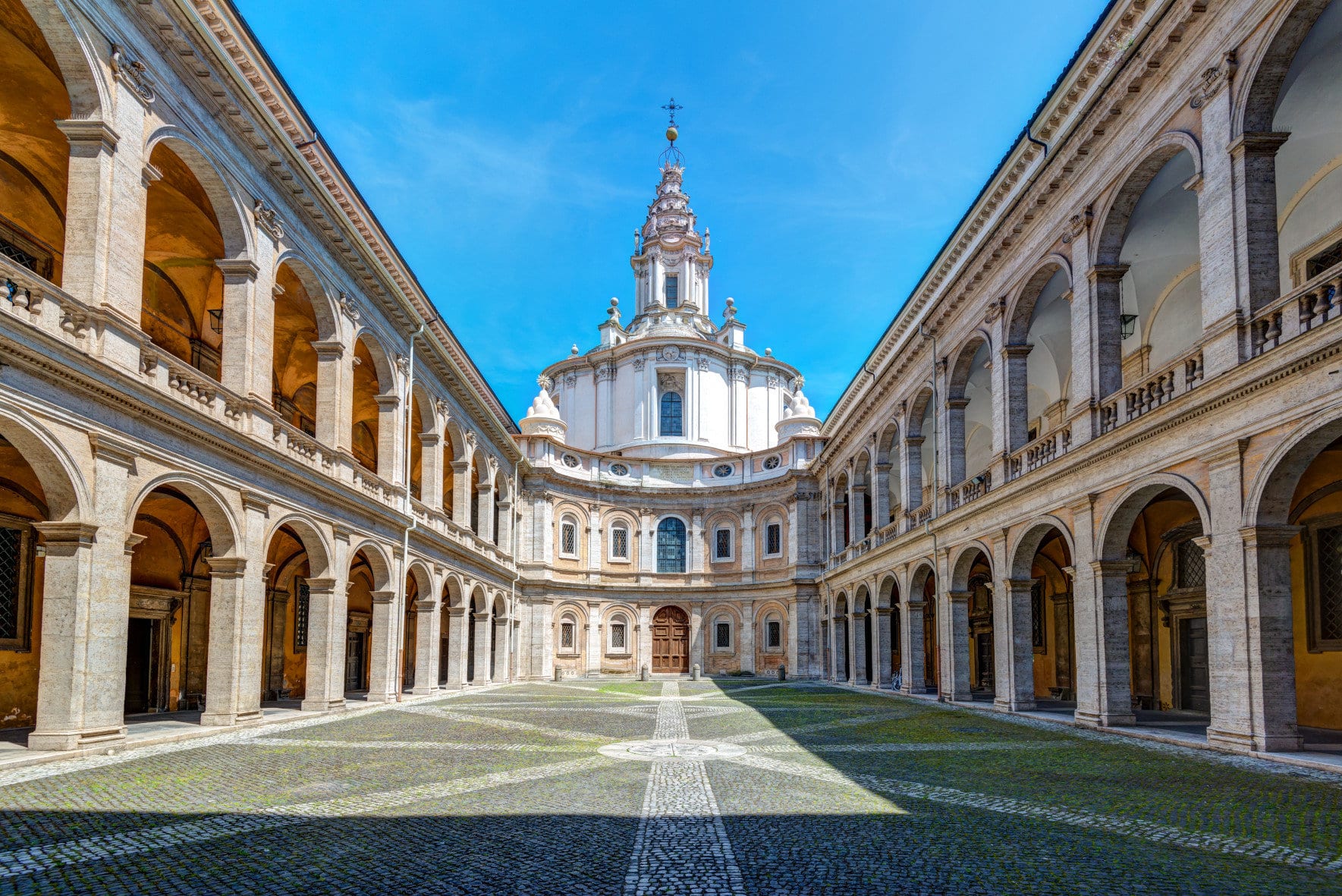
4. Palazzo della Sapienza
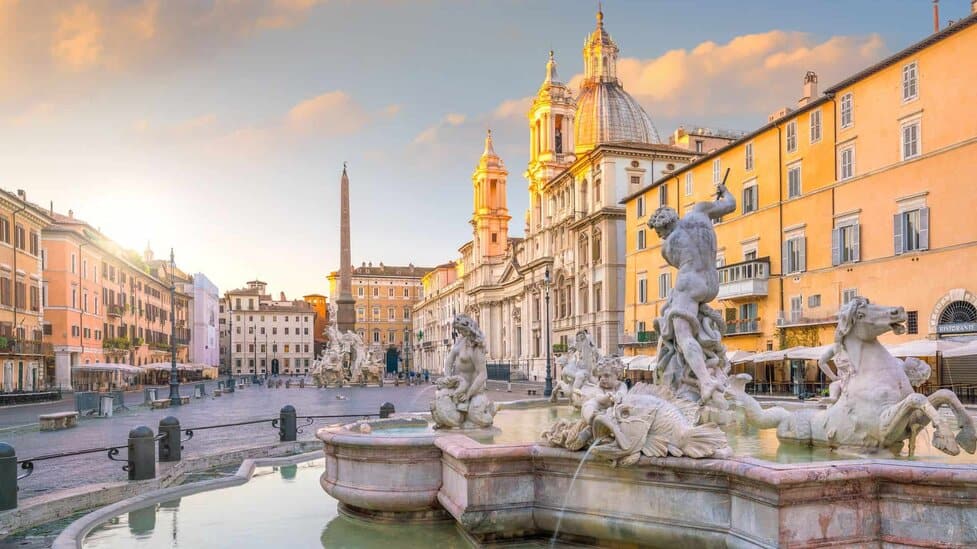
5. Piazza Navona
Fountain of the Four Rivers by Bernini
Sant’Agnese in Agone Church by Francesco Borromini
Fontana del Moro by Bernini
Stadium of Domitian (closes at 6:20pm)
Fountain of Neptune by Bernini
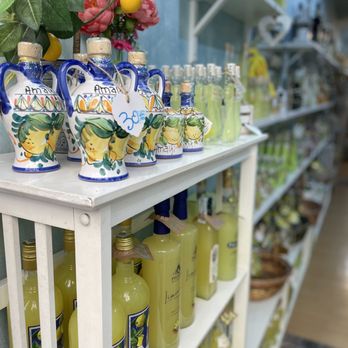
6. A stop for a couple treats! Two Sizes for Tirimisu, Barretta Pesce e Porchetta for Pork sandwiches, and La Boutique del Limoncello Roma for a little Limoncello tasting!
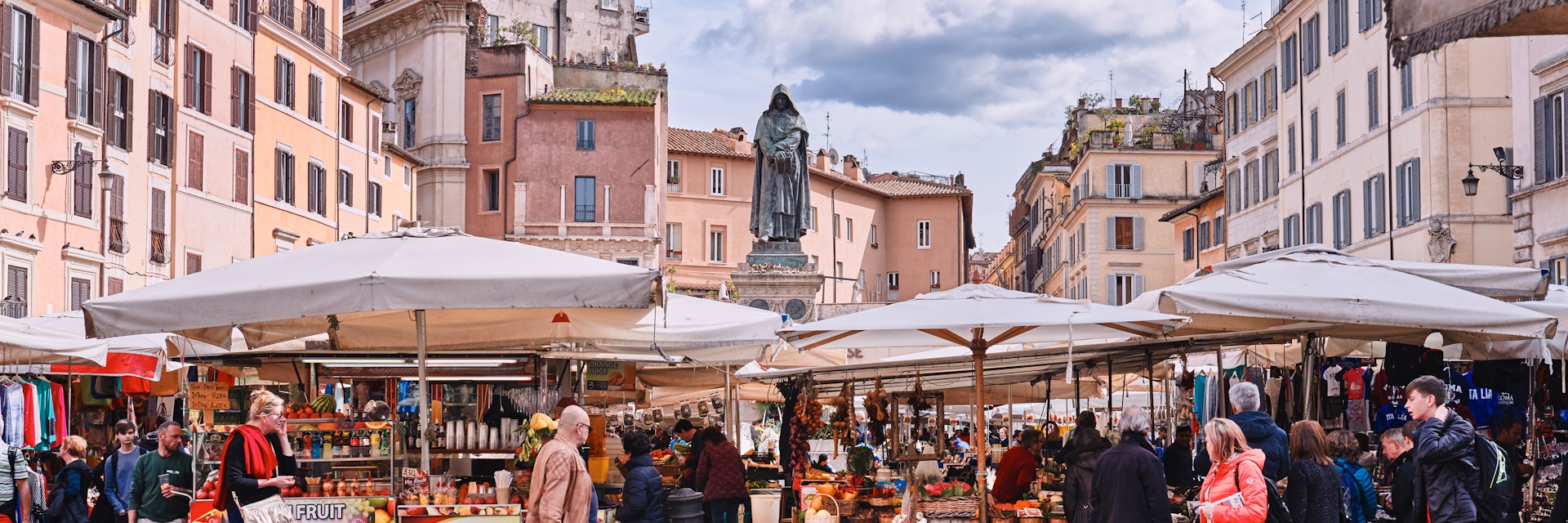
7. Walk through the stalls of Campo de’ Fiori
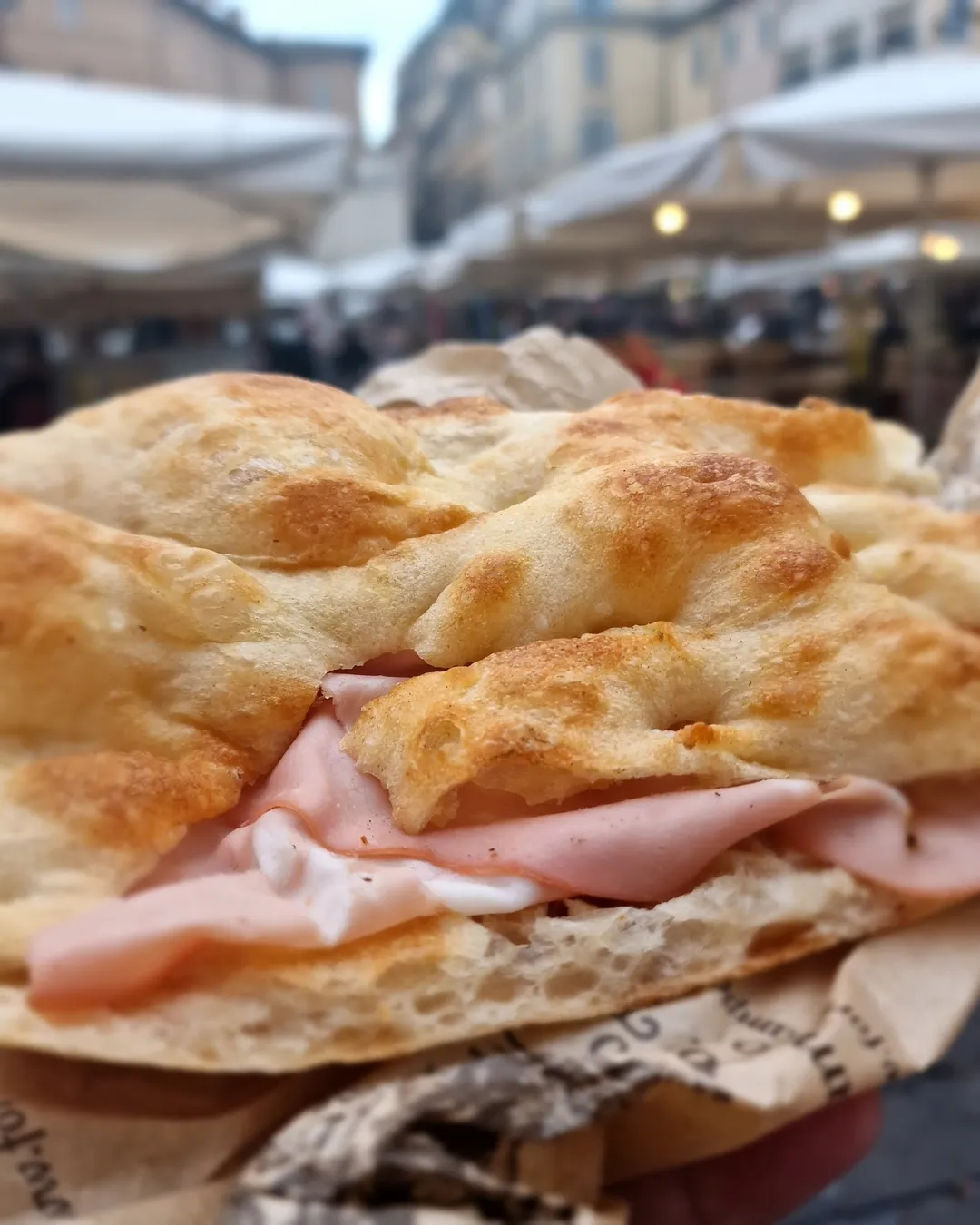
with a stop at Forno Campo de’ Fiori for one of their sandwiches or pizza.
8. Passetto del Biscione
8. Via dei Giubbonari a cute Roman street not to miss!
Day 3 – Rome
morning – Trastavere Walk
Santa Cecilia in Trastevere
Chiesa di Santa Maria dell’Orto
Mercato di San Cosimato
Sotterranei della Schola Cantorum e della Basilica
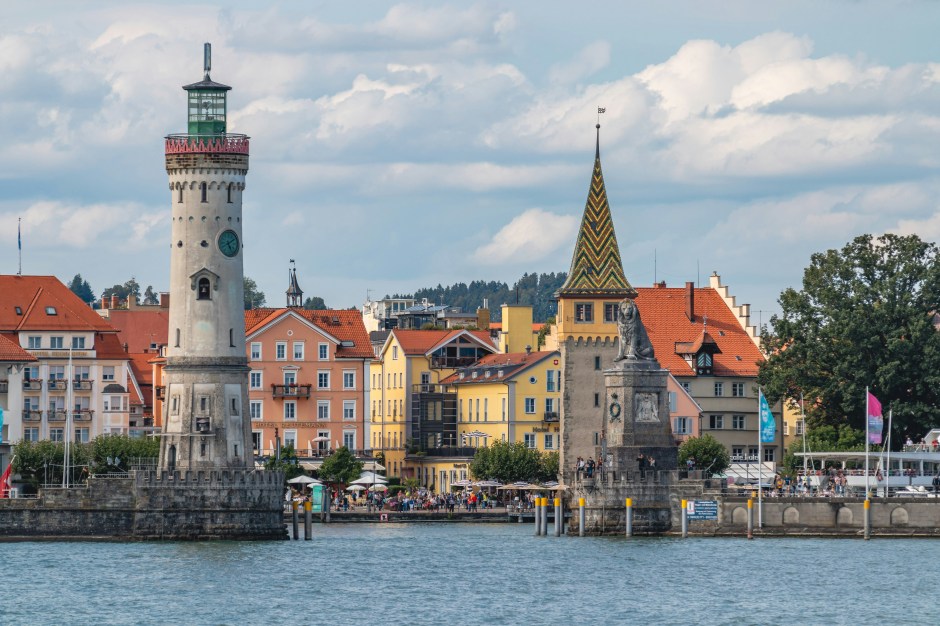
In the southwest corner of Germany where it meets up with Switzerland and Austria is a beautiful lake called Lake Constance. Every time I do any research about it, I think about planning a week-long visit to the area. Its finally time to do that and then maybe we can go for my 50th birthday
ITINERARY IN PROGRESS…
Sunday
Monday
Tuesday
Wednesday
Thursday
Friday
Saturday
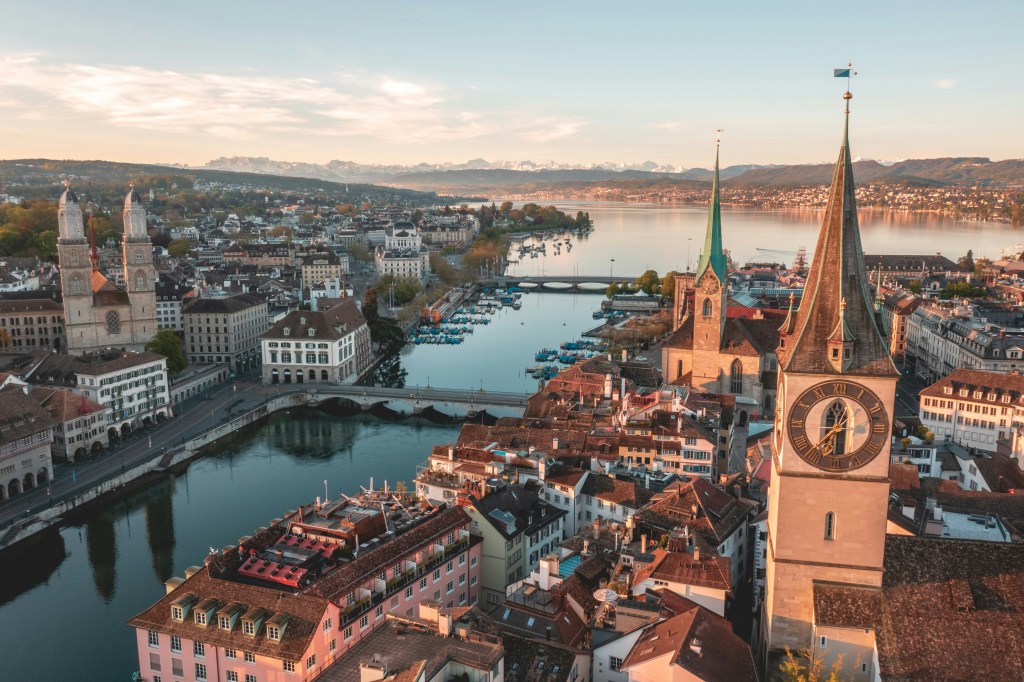
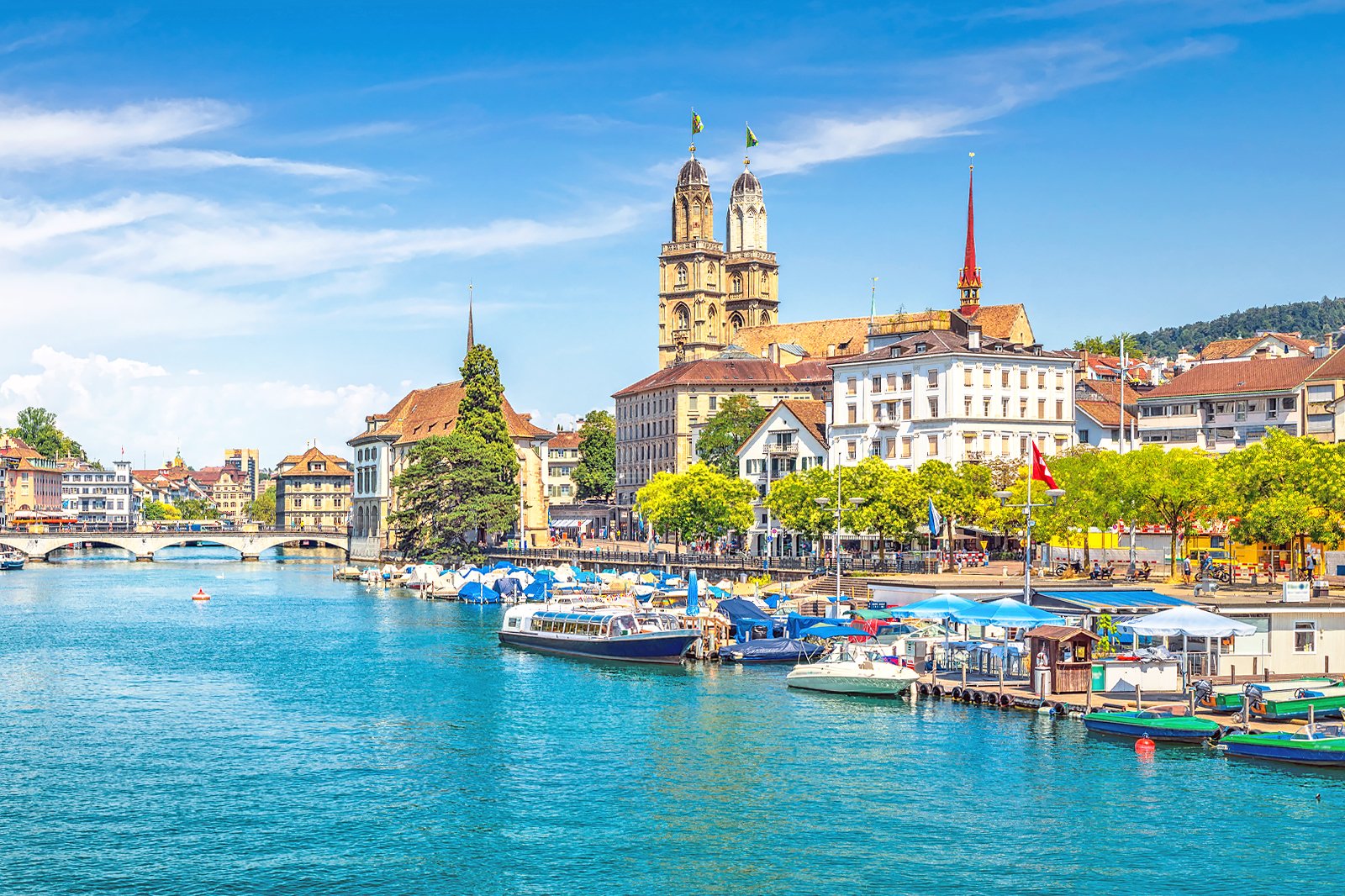
Arrive in Zurich Drive to Lake
Konstanz
Stein am Rhein St Gallen
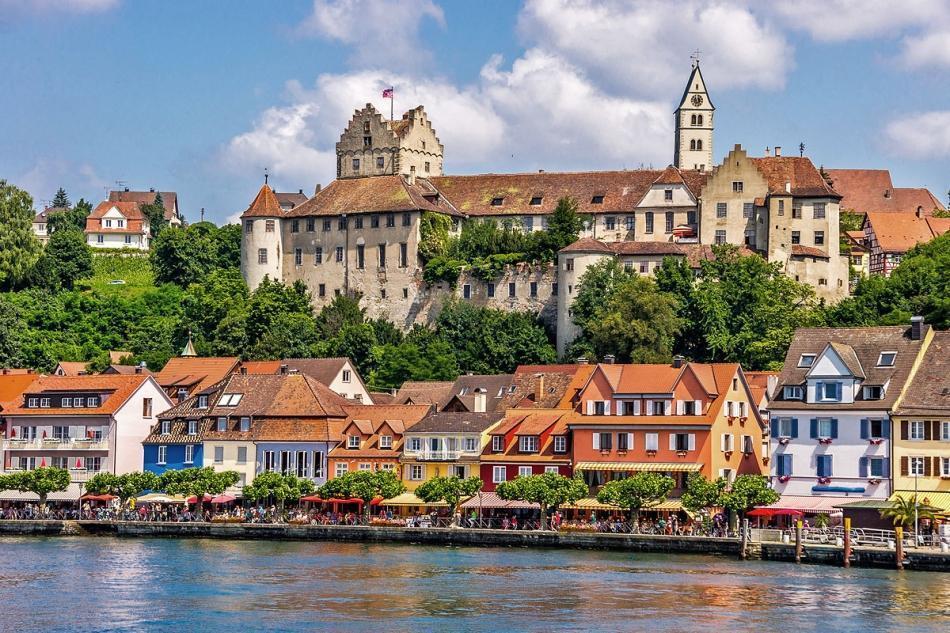
Meersburg
Lichtenstein
Lindau Tettnang
Zurich
Fly Home
Sunday
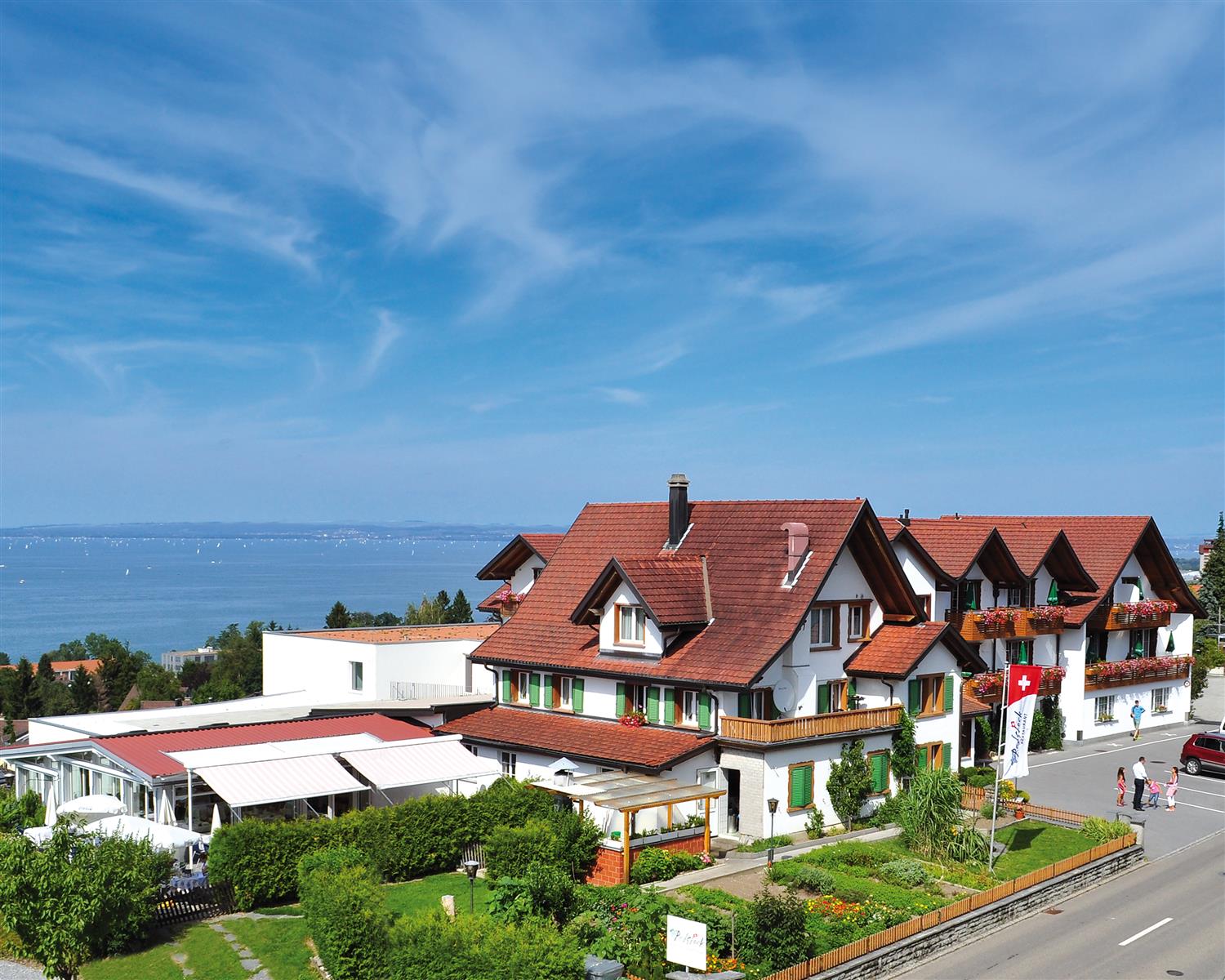
Arrive in Zurich and rent a car for the week. The drive from Zurich to Lake Konstanz is about an hour. Since we want to visit some areas around the Lake, I’m leaning towards a Southern lake hotel location. Right now I’m thinking about the Best Western Rebstock in Rorschacherberg. Pretty views, AAA rates and reliability. It also has a restaurant with great views and outdoor seating.
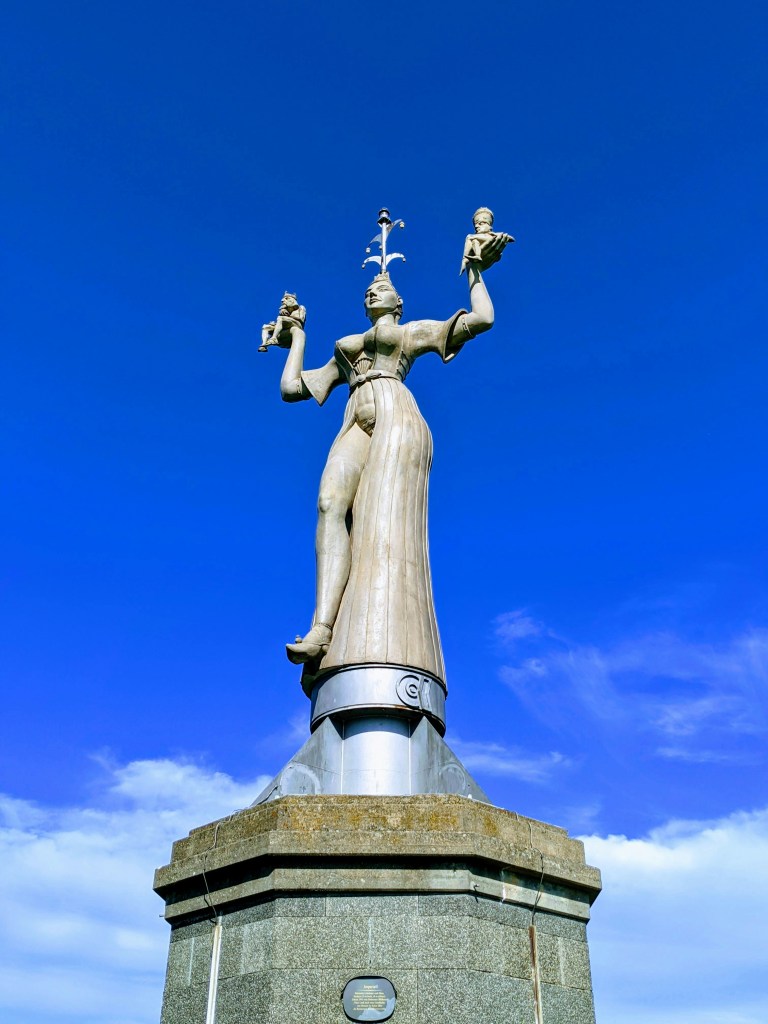
Konstanz is a 50 min drive around the lake. Once we arrive in Konstanz there is a nice 1/2 mile walk from Schnetztor, Emperor’s Fountain, Münster Unserer Lieben Frau to Rheintorturm and then a walk down the promenade back to Schnetztor is about a mile. Somewhere in between we can find a nice place for lunch and maybe a drink after.
After a fun day in Konstanz there are
Tuesday – Friedrichshafen & Meersburg
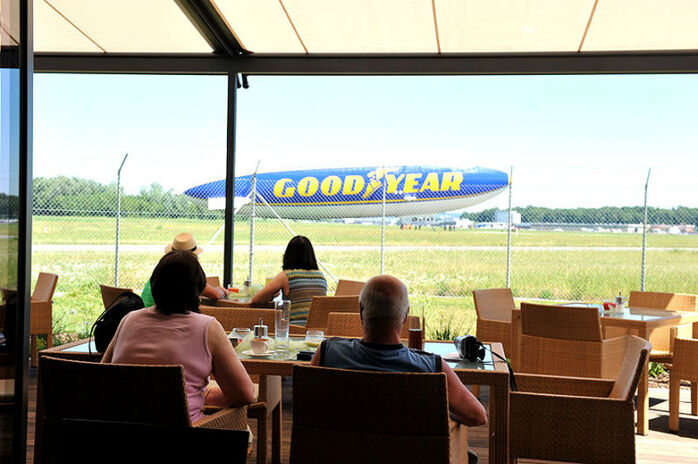
Perhaps a stop at the Zeppelin Hangar Restaurant to watch the Zeppelins take off and land (a ride is 300-500E so we probably won’t be coughing up the cash for that!)
Have an afternoon snack or dinner at Gutsschänke with a beautiful view of the town and lake.
from tripadvisor.com
Here are some local winery recommendations:
Winzerverein Hagnau eG:
Location: Weinstraße 3, 88709 Hagnau am Bodensee (around 10 minutes by car from Meersburg)
About: This cooperative winery in Hagnau, a nearby village, offers a wide selection of wines produced by local growers. They often host tastings where you can sample different varietals, including Müller-Thurgau, Grauburgunder (Pinot Gris), and Spätburgunder (Pinot Noir).
Weingut Haltnau:
Location: Seestraße 9, 88079 Kressbronn (about 30 minutes by car from Meersburg)
About: Situated in Kressbronn, along the northern shore of Lake Constance, Weingut Haltnau is a family-owned winery known for its high-quality wines. They offer guided tours of the vineyards and cellar, followed by tastings of their award-winning wines, including Riesling, Weißburgunder (Pinot Blanc), and more.
Weingut Graf von Kesselstatt:
Location: Hauptstraße 37, 78465 Dettingen-Wallhausen (about 20 minutes by car from Meersburg)
About: This historic winery, located near the town of Wallhausen, has been producing wine for over 650 years. They specialize in traditional grape varieties such as Müller-Thurgau, Grauburgunder, and Kerner. Visitors can enjoy tastings in the elegant tasting room and learn about the winemaking process.
Weingut Hirschhof:
Location: Rosenstraße 12, 88709 Meersburg
About: Located right in Meersburg, Weingut Hirschhof is a small family winery producing a range of wines, including Müller-Thurgau, Grauburgunder, and Spätburgunder. They offer tastings in their cozy courtyard or wine cellar, providing a convenient option for visitors staying in Meersburg.
Wednesday – Stein am Rhein & St. Gallen
Stein am Rhein is a hour drive from Hotel Rebstock. About 20 min into the drive stop in St. Gallen and visit the Abbey and its library…
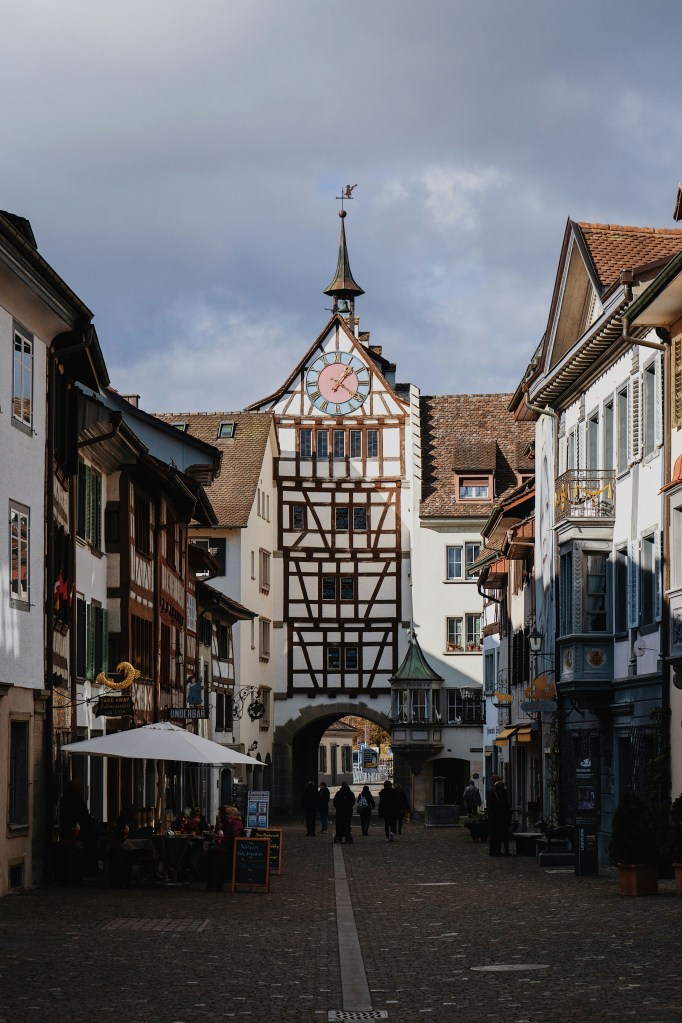
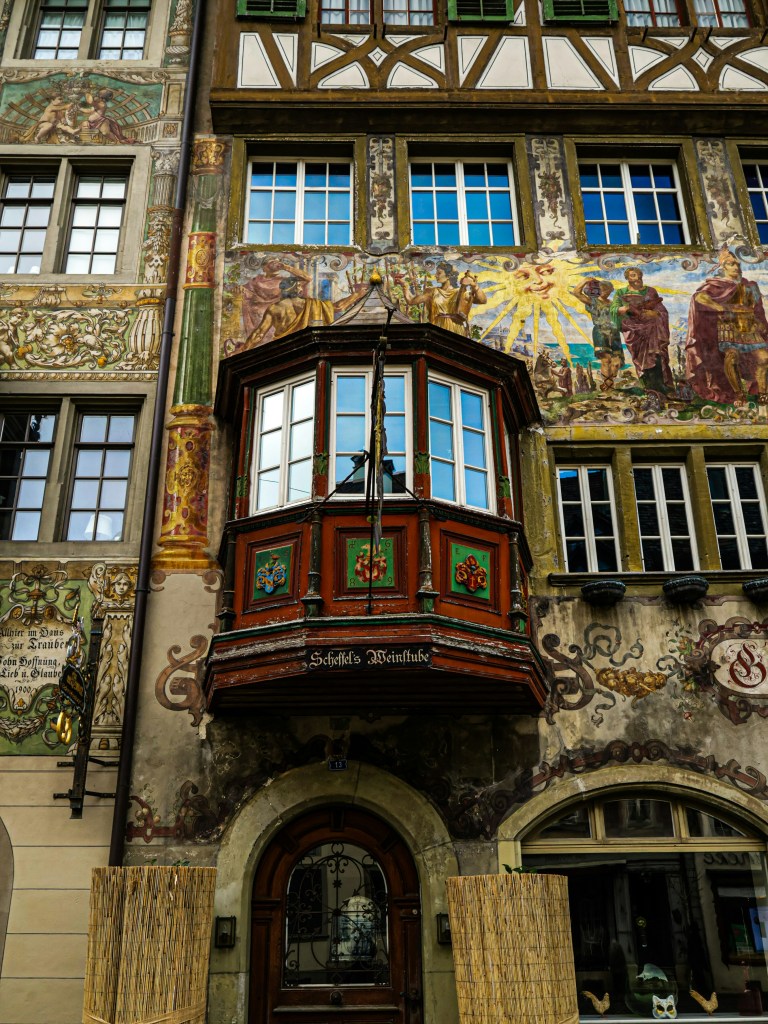
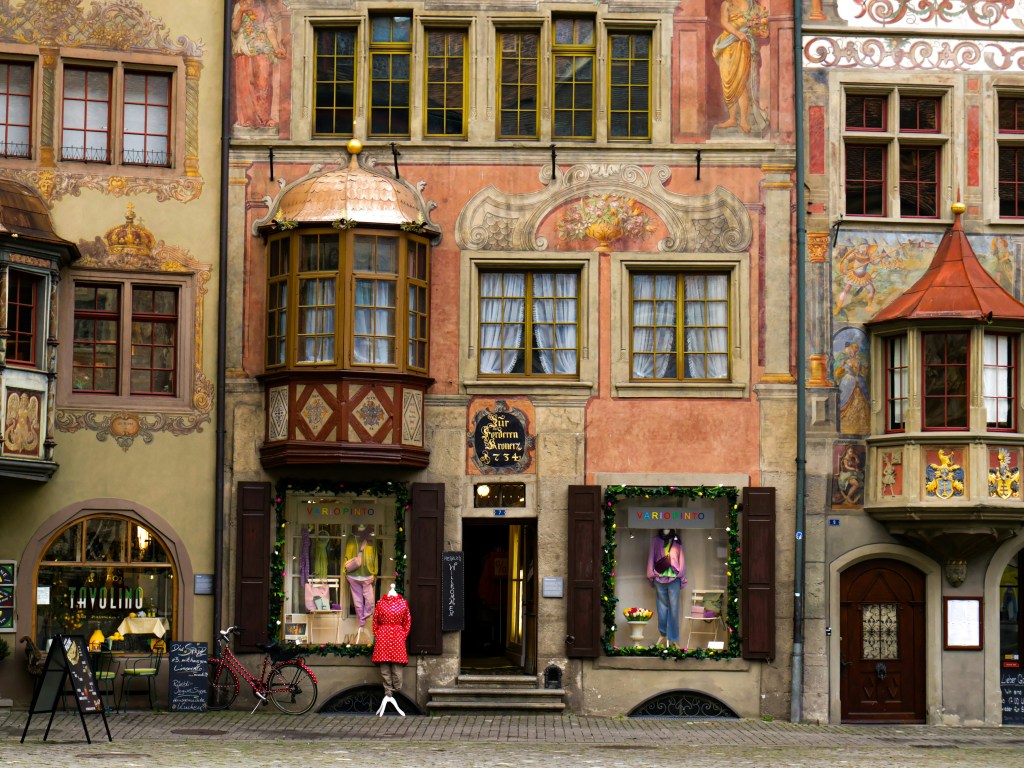
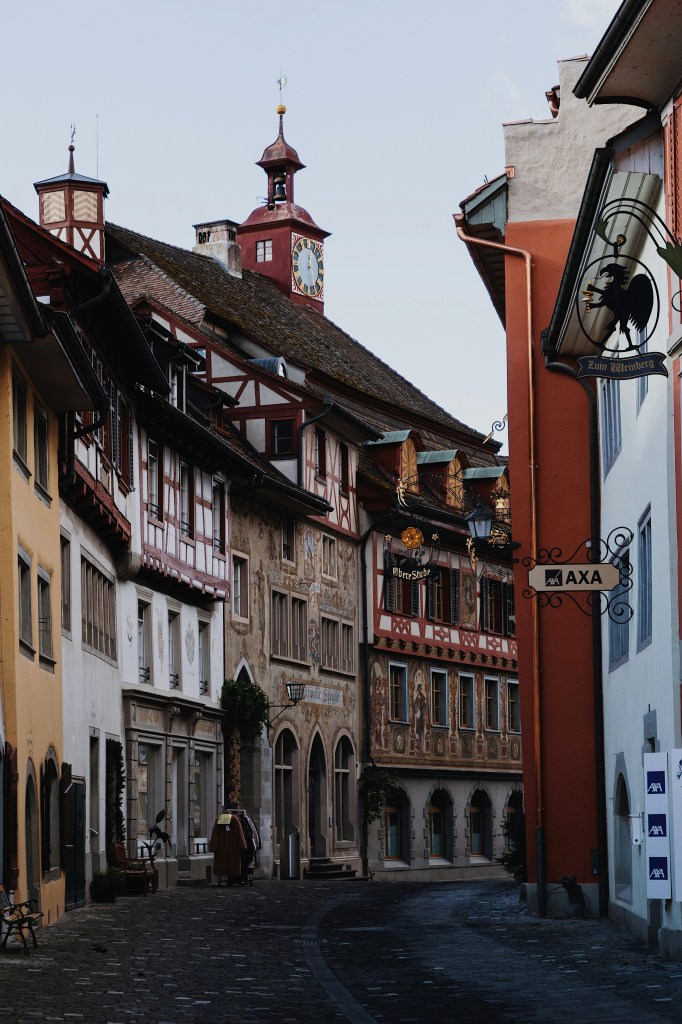
Once you arrive in Stein am Rhein walk around town. The town’s medieval centre retains the ancient street plan. The site of the city wall, and the city gates are preserved, though the former city wall now consists of houses. The medieval part of the town has been pedestrianised and many of the medieval buildings are painted with frescoes.
Old Town (Altstadt):
Wander through the picturesque Old Town of Stein am Rhein, characterized by its beautifully painted medieval buildings adorned with intricate frescoes. The main street, Rathausplatz, is particularly scenic, lined with historic houses and quaint shops.
Rathaus (Town Hall):
Admire the stunning façade of the Rathaus, or Town Hall, which dates back to the 16th century. The building features ornate frescoes depicting scenes from local history and legends, making it a highlight of the Old Town.
St. George’s Abbey (Kloster St. Georgen):
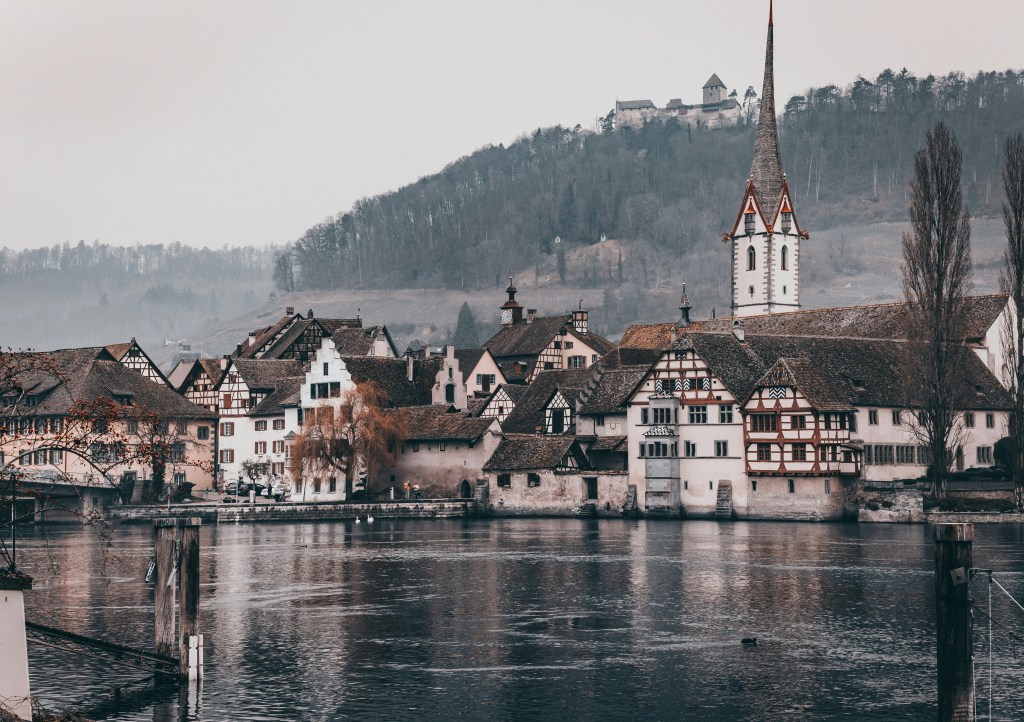
Visit the Benedictine Abbey of St. George, located just outside the Old Town. Dating back to the 11th century, the abbey boasts Romanesque and Gothic architecture, as well as a beautiful cloister. Guided tours are available to explore the abbey’s history and architecture.
Museum Lindwurm:
Discover the history of Stein am Rhein and the surrounding region at the Museum Lindwurm. Housed in a historic building near the town center, the museum features exhibits on local art, culture, and archaeology, including artifacts dating back to Roman times.
Schloss Hohenklingen:
Take a short hike or drive to Schloss Hohenklingen, a medieval castle perched on a hill overlooking Stein am Rhein and the Rhine River. Explore the castle grounds, enjoy panoramic views of the town and surrounding countryside, and visit the castle museum to learn about its history.
Rhine River Promenade:
Enjoy a leisurely stroll along the Rhine River promenade, which offers scenic views of the river and the surrounding landscape. Relax on one of the benches or grab a drink at a riverside café while taking in the tranquil atmosphere.
Travel a little farther up the Rhein to Neuhausen am Rheinfall, Switzerland and have dinner overlooking the falls.
on the way back travel along the river and lake with a hour+ drive. Take a quick stop to watch the sunset (around 8-8:30pm) at Werd island with the beautiful Wallfahrtskapelle St. Otmar.
Perched on a hill overlooking the capital city of Vaduz, Vaduz Castle is a symbol of Liechtenstein and one of its most recognizable landmarks. While the castle itself is not open to the public as it serves as the residence of the Prince of Liechtenstein, visitors can admire its exterior and panoramic views of the surrounding area.
Vaduz:
Explore the charming capital city of Vaduz, which offers a mix of historic landmarks, modern architecture, and cultural attractions. Highlights include the Kunstmuseum Liechtenstein (Liechtenstein Art Museum), the Postage Stamp Museum, and the pedestrianized Städtle area with its shops and cafes.
Gutenberg Castle (Schloss Gutenberg):
Located in the town of Balzers, Gutenberg Castle is one of the best-preserved medieval castles in Liechtenstein. Visitors can tour the castle grounds, explore the museum inside the castle, and enjoy panoramic views of the Rhine Valley from the tower.
Red House (Rotes Haus):
The Red House, located in Vaduz, is a historic building dating back to the Middle Ages. It is one of the oldest surviving structures in Liechtenstein and is now home to the Liechtenstein National Museum. The museum showcases the history and culture of the principality through exhibits on archaeology, art, and folklore.
Liechtensteinisches Landesmuseum:
The Liechtenstein National Museum, housed in the Red House, offers a comprehensive look at the history and heritage of Liechtenstein. Visitors can explore exhibits on topics such as archaeology, natural history, and the princely family’s art collection.
Alpine Scenery:
Liechtenstein’s picturesque Alpine scenery provides ample opportunities for outdoor activities such as hiking, mountain biking, and skiing (in winter). The country’s mountainous terrain offers stunning vistas, peaceful trails, and the chance to connect with nature.
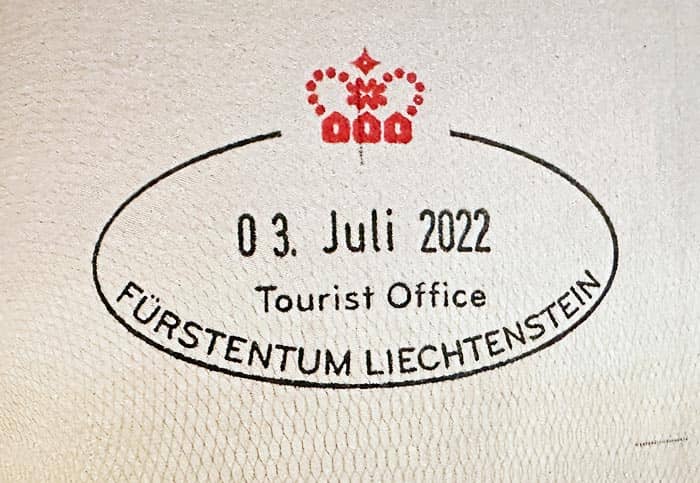
First Stop in Vaduz, the capital of Lichtenstein. Make sure to stop at the Post Office to get our passports stamped!
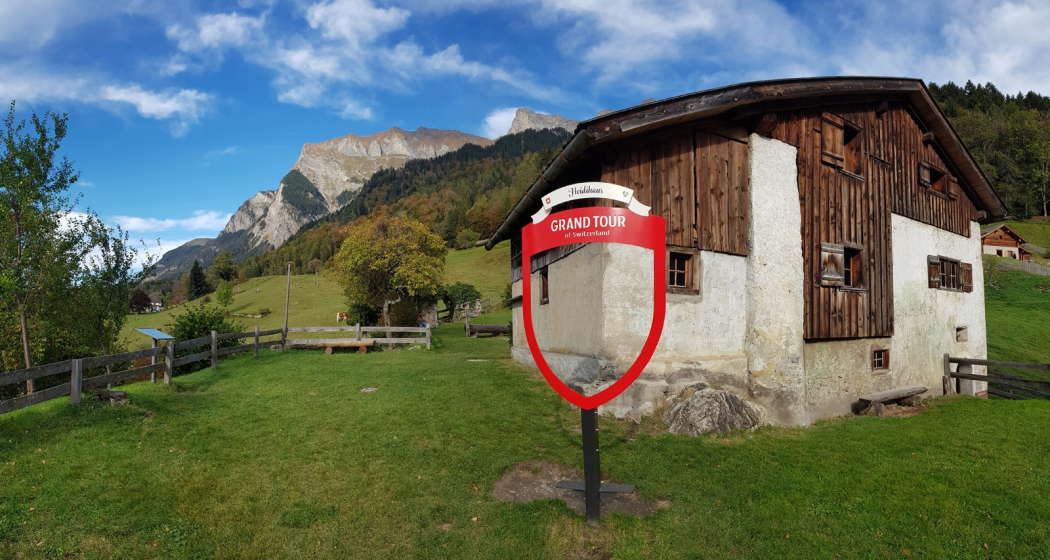
Just south of Lichtenstein is Heidi’s House a must visit when someone in the group is named Heidi.
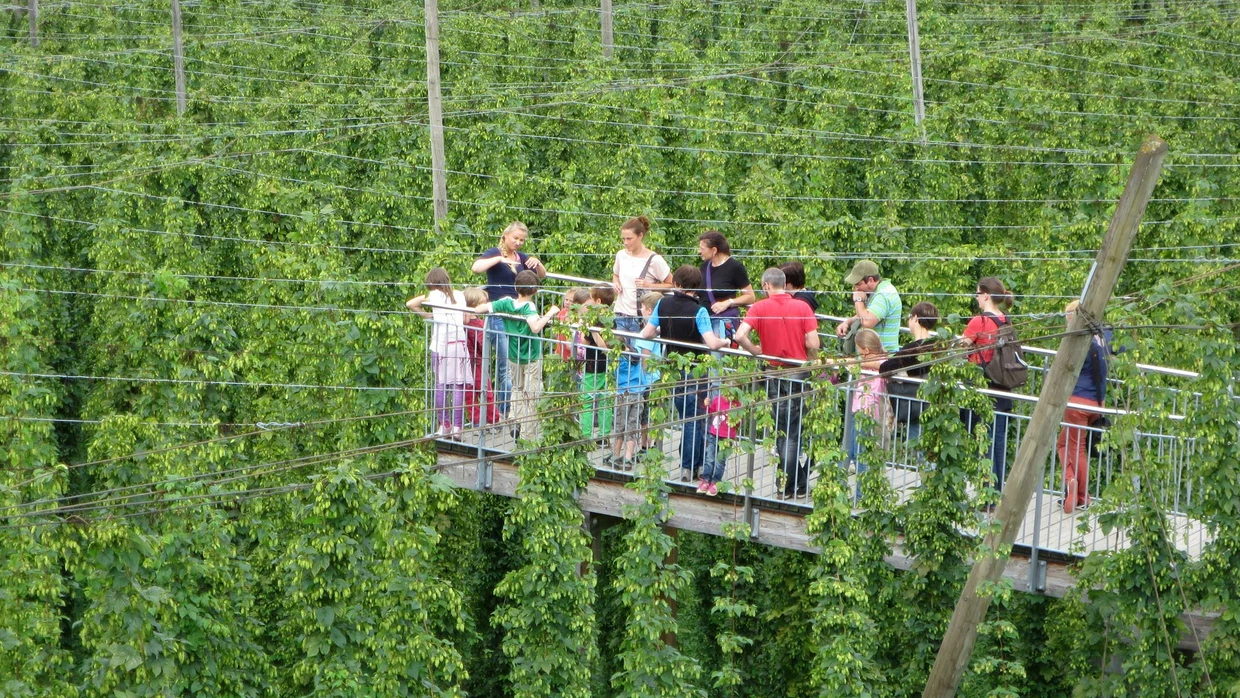
Next drive up into the Northern hills to visit Hopfengut N° 20. HOPFENGUT No20 in Tettnang combines hop production, a brewery, a museum, a shop and a restaurant; Here, the fourth generation of the Locher family produces the finest aroma hops for breweries around the world and transforms them into high-quality beer specialities. Whether you are tasting the beer, visiting the museum, checking out the shop making the most of a convivial end to the day in our restaurant, enjoy a fascinating journey into the world of hops.
from Bodensee.eu
This is a beer making region and the town is picturesque. Its worth a short visit. Tettnang
Since we visited Strasbourg and Breitnau during our Rhine cruise in 2007, we’ve always wanted to go back and tour the region in greater detail. This plan does that in a week and a half.
MON
TUE
WED
THU
FRI
SAT
SUN
1
2
3
Fly to FRA
Arrive in FRA Freiberg
Freiberg
4
5
6
7
8
9
10
Freiberg
Freiberg
Freiberg
Freiberg to Strasbourg
Strasbourg
Strasbourg to Mainz
Mainz
11
Fly home from FRA
Day 1
Lufthansa has a non-stop flight to Frankfurt.
Day 2 – Arriving in the morning we’d pick up a rental car and drive approx 3 hours south to the Black Forest border town of Freiburg. We’ll be making 1 stop on the way for lunch at Speyer.
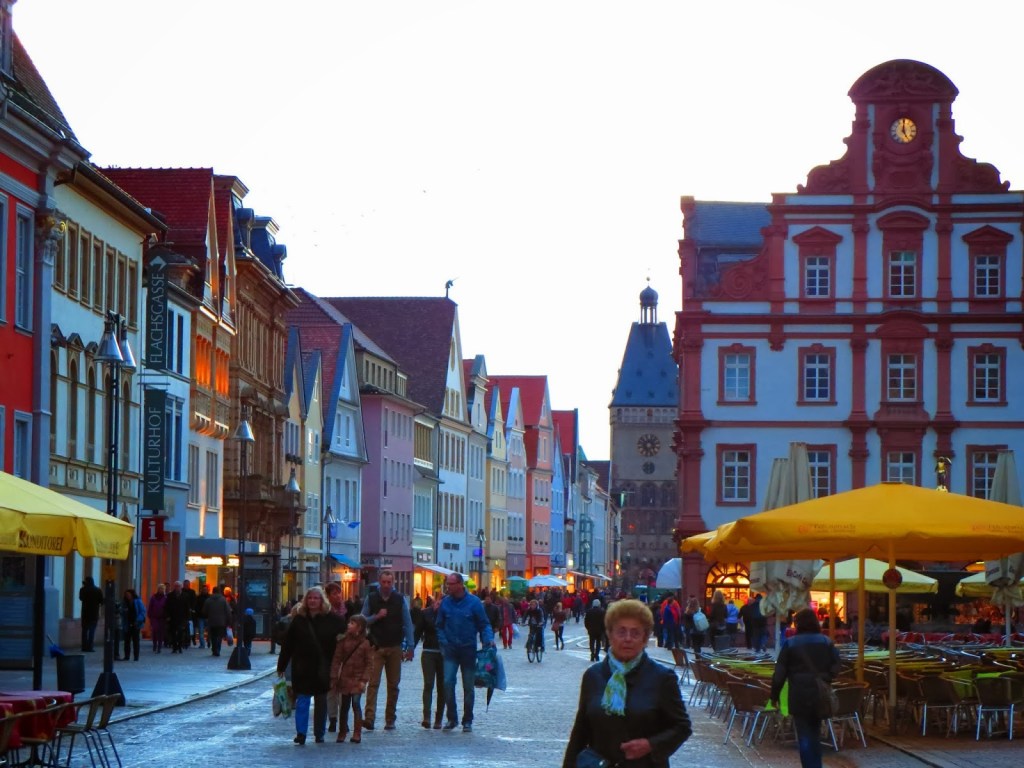
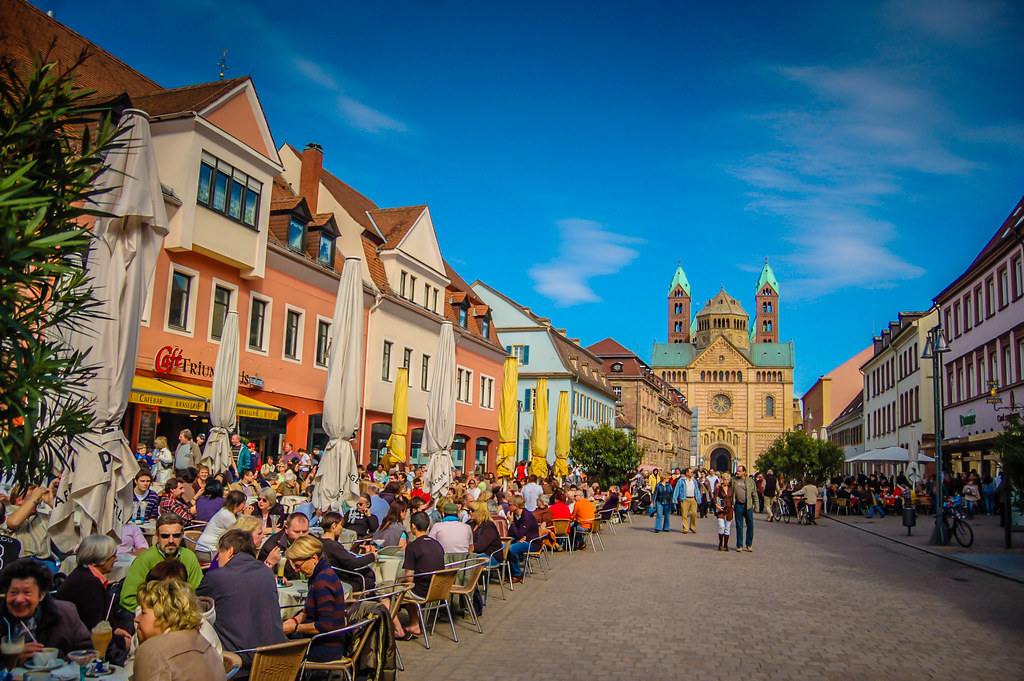
We can’t miss a visit to the Speyer Cathedral, officially known as the Cathedral of St. Mary and St. Stephen, is the world’s largest surviving Romanesque church. Its huge triple-naved vaulted basilica is the central element in a design that greatly influenced Romanesque architecture in the 11th and 12th centuries. Its fully-preserved crypt is also the largest Romanesque columned hall in Europe. Size really does matter in Speyer Cathedral. Apart from the largest body-count of Holy Roman Emperors and kings under the high altar, it boasts the monster Cathedral Bowl outside the main door. With a capacity of 1,560 litres, every new bishop has had to fill it with wine as a gift to the people. After our visit to the Cathedral we can walk around or have a seat a a local cafe for lunch.
After our stop in Speyer we head the rest of the way to our southern basecamp in Freiburg im Breisgau, a vibrant university city in southwest Germany’s Black Forest, is known for its temperate climate and reconstructed medieval old town, crisscrossed by picturesque brooks (bächle). In the surrounding highlands, hiking destination Schlossberg hill is linked to Freiburg by a funicular. With a dramatic 116m spire, the Gothic cathedral Freiburg Minster towers over the central square Münsterplatz.
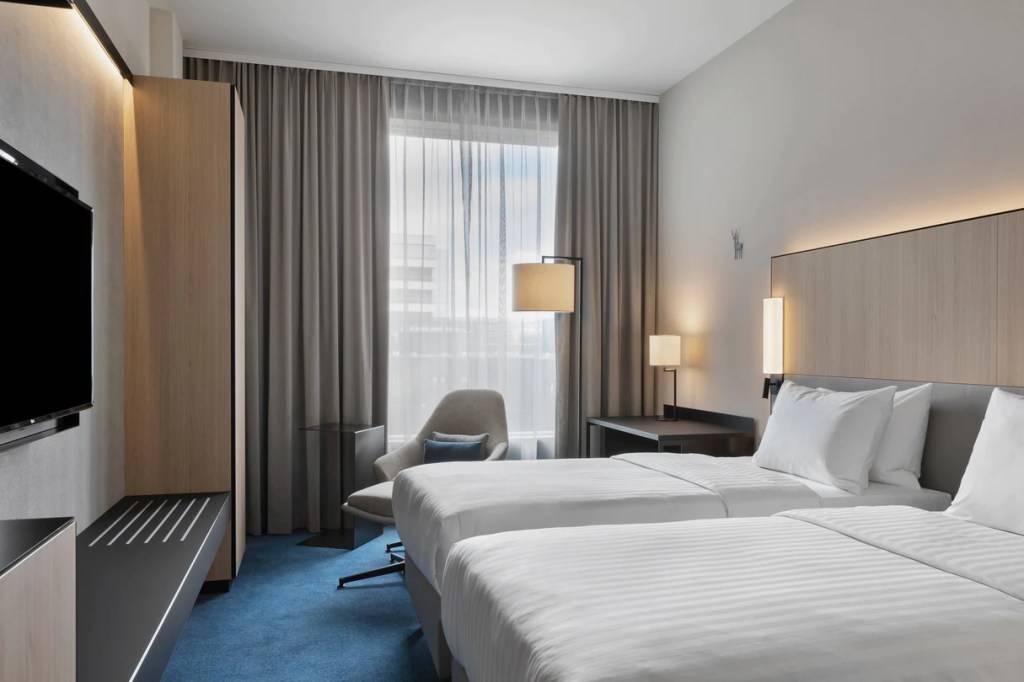
We’ll be staying at the Courtyard Marriott a modern hotel just a few min walk to the Münsterplatz.
Day 3 – Freiburg
+ Titisee – Ravenna Bridge
Day 4 – A drive north
3.5 hrs driving
Mummelsee – Allerheiligen
Last stop as we head out of the Black Forest is an amazing Winery called Weingut Markgraf von Baden at Schloss Staufenberg. A beautiful winery in the foothills of the Black Forest at the site of the ruins of a Castle just seems like a moment not to be missed. A glass of wine sitting out on the patio with views for miles.
Day 5 – Drive to Colmar
Day 6 – Colmar
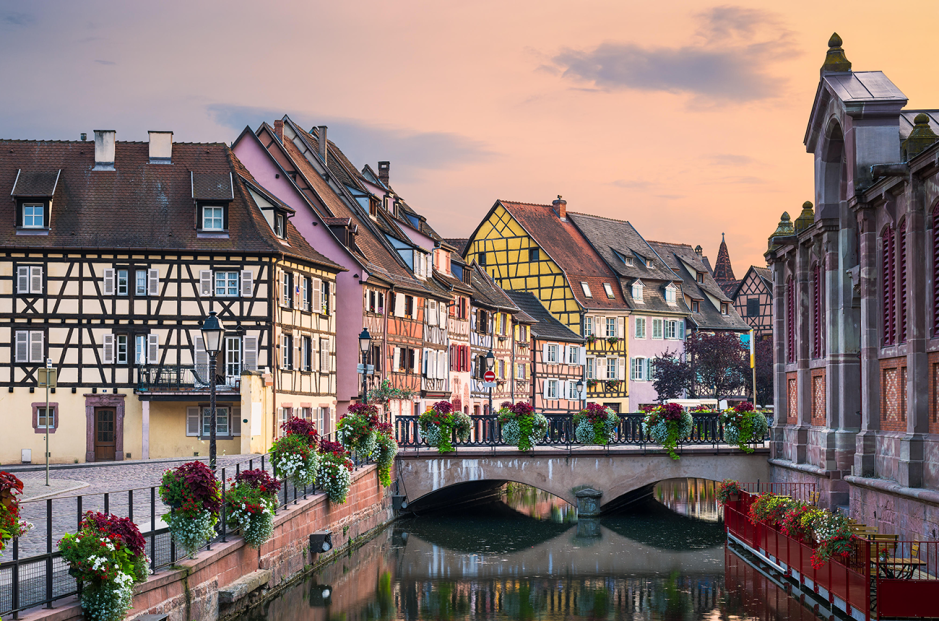
Eguisheim – Settled by the Senones tribe, and made a center for wine-cultivation by the Romans, the village of today didn’t develop until the 11th century when the Dukes of Alsace built here a castle here. The village hasn’t changed much since the Middle Ages, with its well-preserved half-timbered houses dating back to the town’s foundation. The brightly-colored houses are complemented by bursts of blooming flower, which has earned the village the France’s highest award for town garden planting. The Rue du Rempart Sud, which follows the town’s old moat, now circles the entire medieval center and is a great way to experience the town’s charm. In the Place du Chateau, along with with the colorful chateau, church, houses, and fountain visitors will find a family of nesting storks.
Day 7 – Freiburg to Strasbourg
Neuf-Brisach
Kaysersberg – In the 13th century, the fortified settlement of Castrum Keisersberg was established along the route that connected the Rhine plain and Lorraine. By the 14th century, Kaysersberg had become a free imperial city, though gradually fell into obscurity after passing to the French in the 17th century. Today, traditional half-timbered houses still line the river that runs through the town. Much of the town dates from the 16th century, including the fortified stone bridge spanning the Weiss river. The Church Sainte-Croix was built between the 13th and 15th centuries, and has retained its Romanesque facade. After enjoying the historic towers, ramparts, and mansions, visitors can sit down at a cafe to enjoy the town’s signature wine: Tokay, which is believed to have been brought from Hungary in the 16th century.
Riquewihr – Dating back to the ancient Romans, Riquewihr flourished as a fortified village in the Middle Ages, and miraculously escaped World War II unscathed. Now listed as one of the ‘most beautiful villages of France’, the village looks much as it did in the 17th century, complete with fortified walls, colorful half timbered houses, and lots of flowers. On Rue du General de Gaulle, the main street, visitors can stop at the Tourist Office for a map. However many of the most interesting buildings are on the same street. Attractions not on the main street include the 13th century Dolder tower, part of the town’s original fortifications. In front of the Dolder is ‘the fountain of gauging’, which was used to check the capacity of wine barrels. The Thieves Tower is pentagonal on the outside and square on the inside, and still has a torture chamber inside.
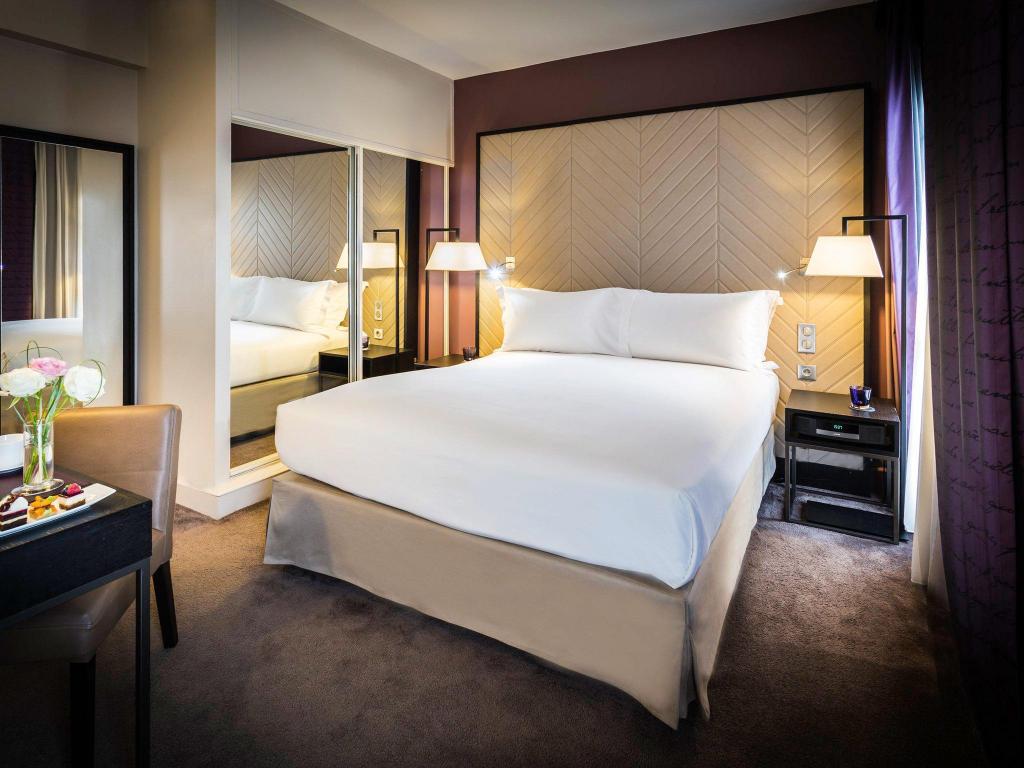
Finally we arrive in Strasbourg France. We’ll be staying in the old town on the island at the Sofitel Strasbourg Grande Île, just a 1/3 mi from the famous Strasbourg Notre Dam Cathedral. I’m always going to pick the hotel with a purple theme. That this one also has underground parking for our car is a bonus.
Day 8 – Strasbourg
Cathedral, Canal Cruise
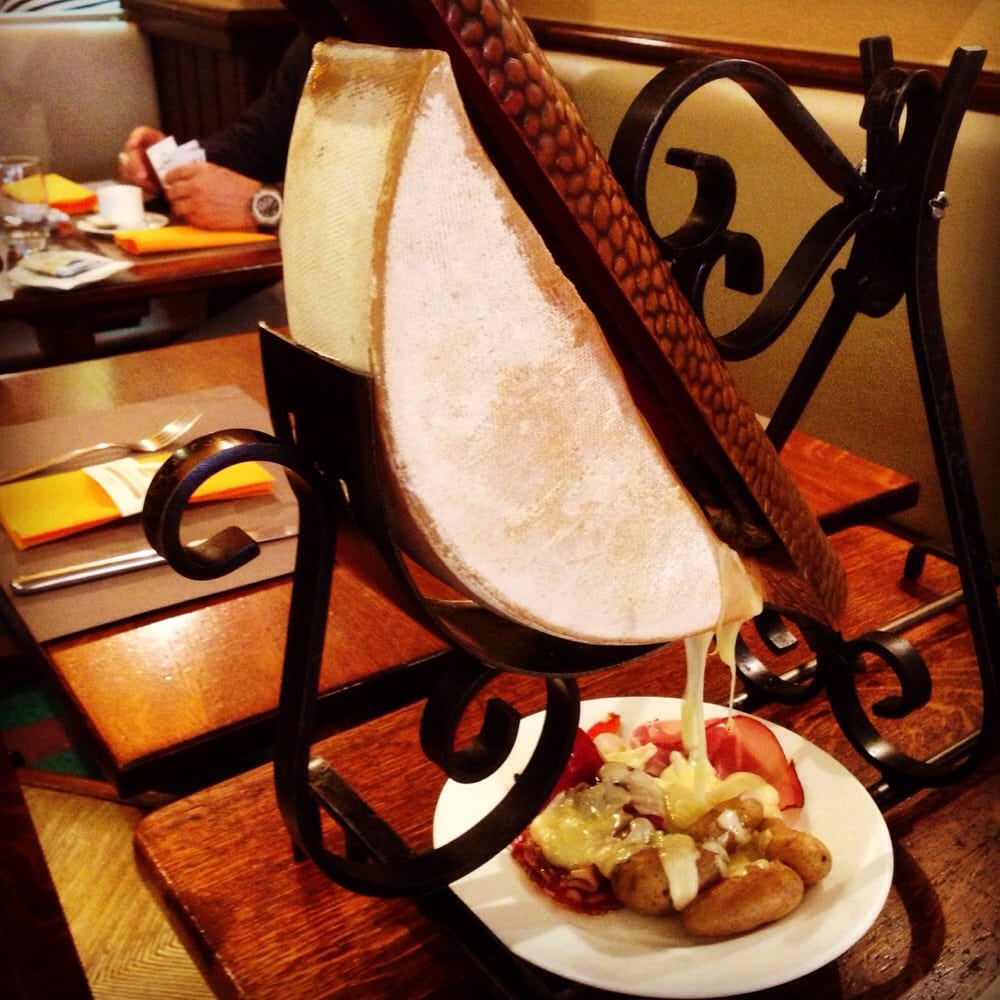
Dinner – La Cloche à Fromage
Try perfectly cooked cheese fondue, raclette and blue cheese. The cooks here prepare good parfait, che and cheesecakes. Drink delicious pinot grigio, cordial or Kir, it’s a must when visiting this place. Come here and have great latte.
The warm atmosphere of this spot makes customers feel relaxed and have a good time. The positive aspect of this restaurant is that the staff is friendly. Spectacular service is something clients appreciate here.
Day 9 – Strasbourgto Mainz
Today we relocate to our last stop, Mainz, Germany. Straight thru the drive is about 3 hours but on the way we’ll make a few stops.
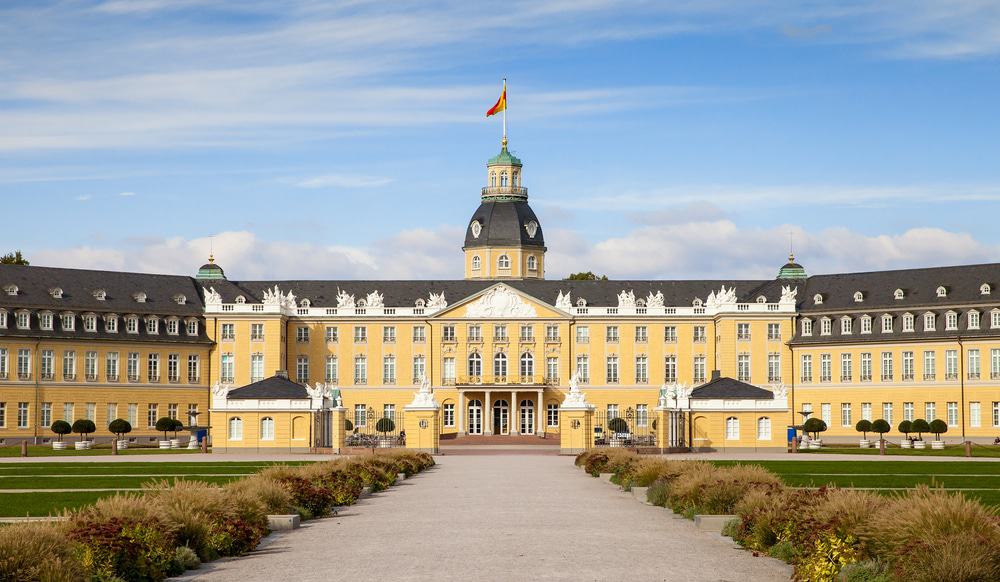
From Oudenkirk we’ll head to north to Karlsruhe Palace, we can either stop for a photo or decide to go in and visit the Palace. The palace forms the axis with 32 streets and avenues shooting out into the city of Karlsruhe, hence its nickname of ‘Fan City’. The palace was built in 1715 and Karlsruhe soon grew around it. By German standards, the city is still relatively young and is regarded as more liberal than most with a reputation for encouraging art and culture to flourish. The palace is surrounded by immaculately maintained gardens and forestry at the back.
At the top of every visitor’s list is the symbolic heart of the city — the red-sandstone Heidelberg Castle, which is consistently voted by foreign visitors as the top tourist attraction in Germany. Visitors can wander the grounds and from the castle walls, marvel at the views of the Old Town that never fail to thrill. The Old Town itself is a must see in order to sample the charms of the elegant churches, picture book lanes, and alleyways set against the backdrop of the beautiful Neckar River. This area of the city also contains the longest pedestrianized shopping strip in Germany. Slightly out from the center, but no less impressive is Philosophers’ Way, the name given to the path just above the city that allegedly inspired the philosophers of old. The path offers fabulous views and is often described as ‘peaceful, romantic and beautiful, a place to commune with nature’.
At the end of our journey we reach our hotel in Mainz, the Mainz Hilton.
The Mainz Old Town isn’t incredibly large and is just a short walk from the hotel. Once we drop off our luggage we can take a walk and explore the city.
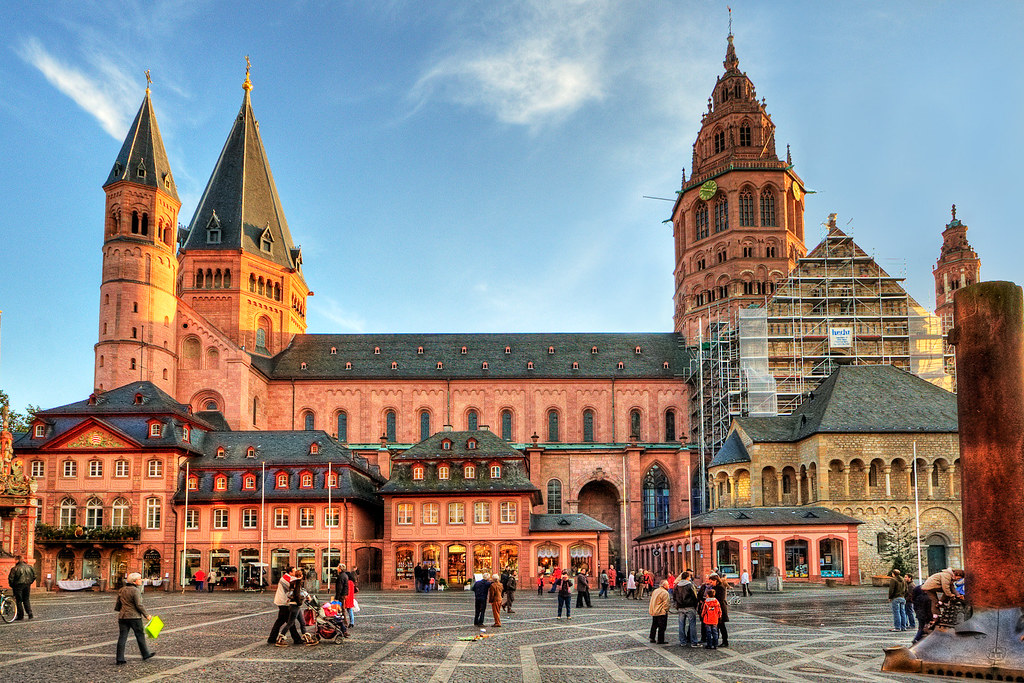
Gutenberg MuseumMainz DomHolzturmMarkt
After our walk around town we’ll find a restaurant to take a rest and have a good meal with good wine (as we are in the German Wine Region). Heiliggeist is just off the main square. Its a converted old church that makes a great background for a good evening. It also has a great courtyard for outside seating as well.
Day 10 – Mainz
Today we take a wine tour. Bordering on the outskirts of Mainz the vineyards of Rheinhessen and Rheingau are perfectly located for a great day out with visits to some of the most dynamic winemakers. You will taste not only beautiful Rieslings but also fantastic examples of Silvaner, Pinots, Chardonnay.
Hotel: NH Collection Munchen Bavaria (152.24 EUR/Night) Right near central train station
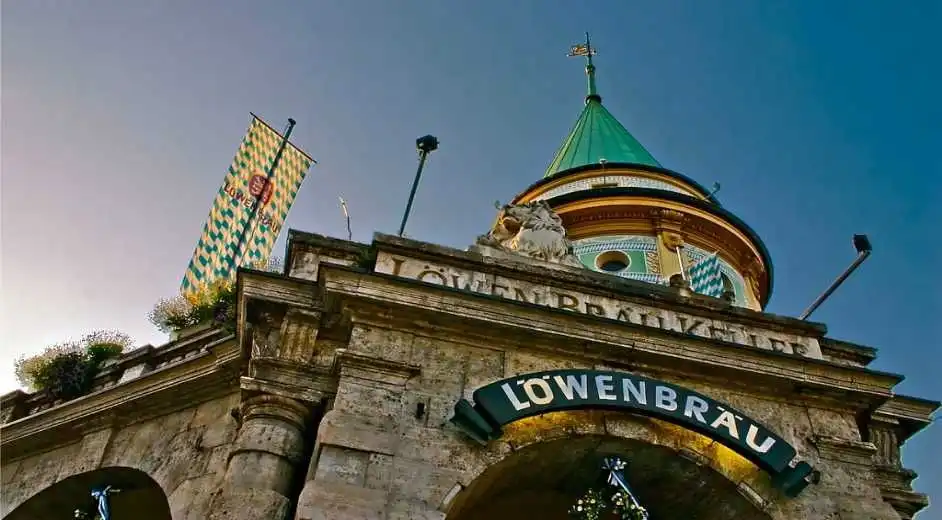
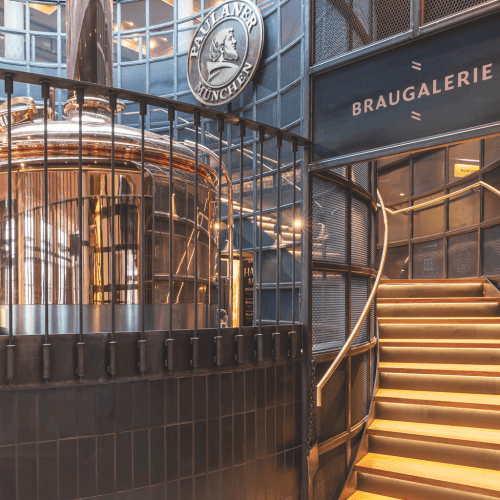
Dinner : Löwenbräu Biergarten A short Light Rail trip on Route (20 or 21). This is the first of our tours of the Big 6 Breweries of Munich. The “Big 6” Munich breweries are the only breweries officially allowed to serve beer at Oktoberfest: Augustiner, Hacker-Pschorr, Hofbräu, Löwenbräu, Paulaner, and Spaten
Day 2
Munich Sightseeing
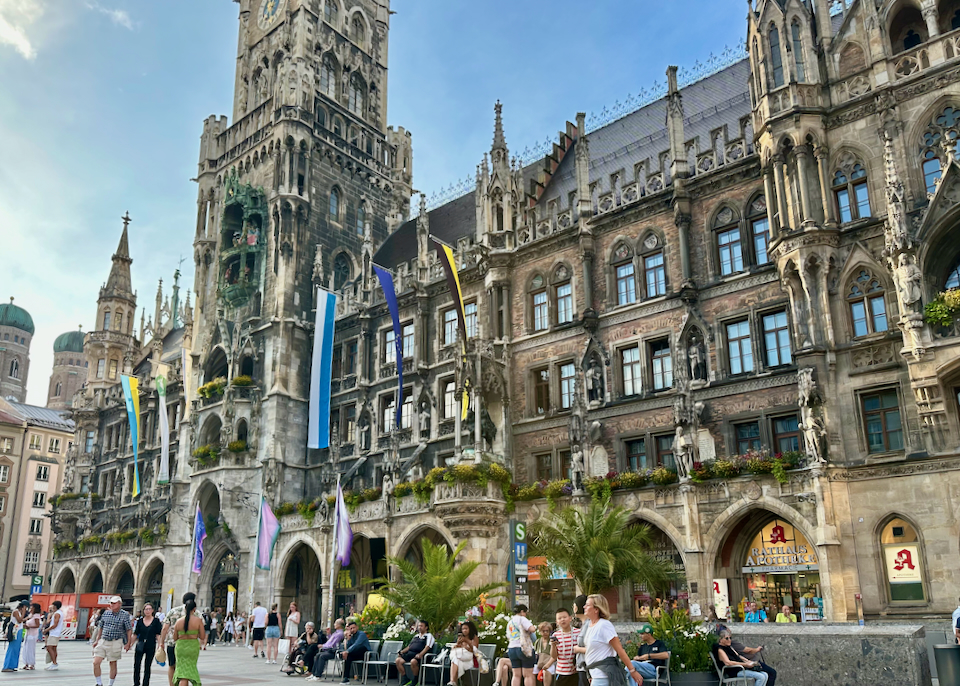
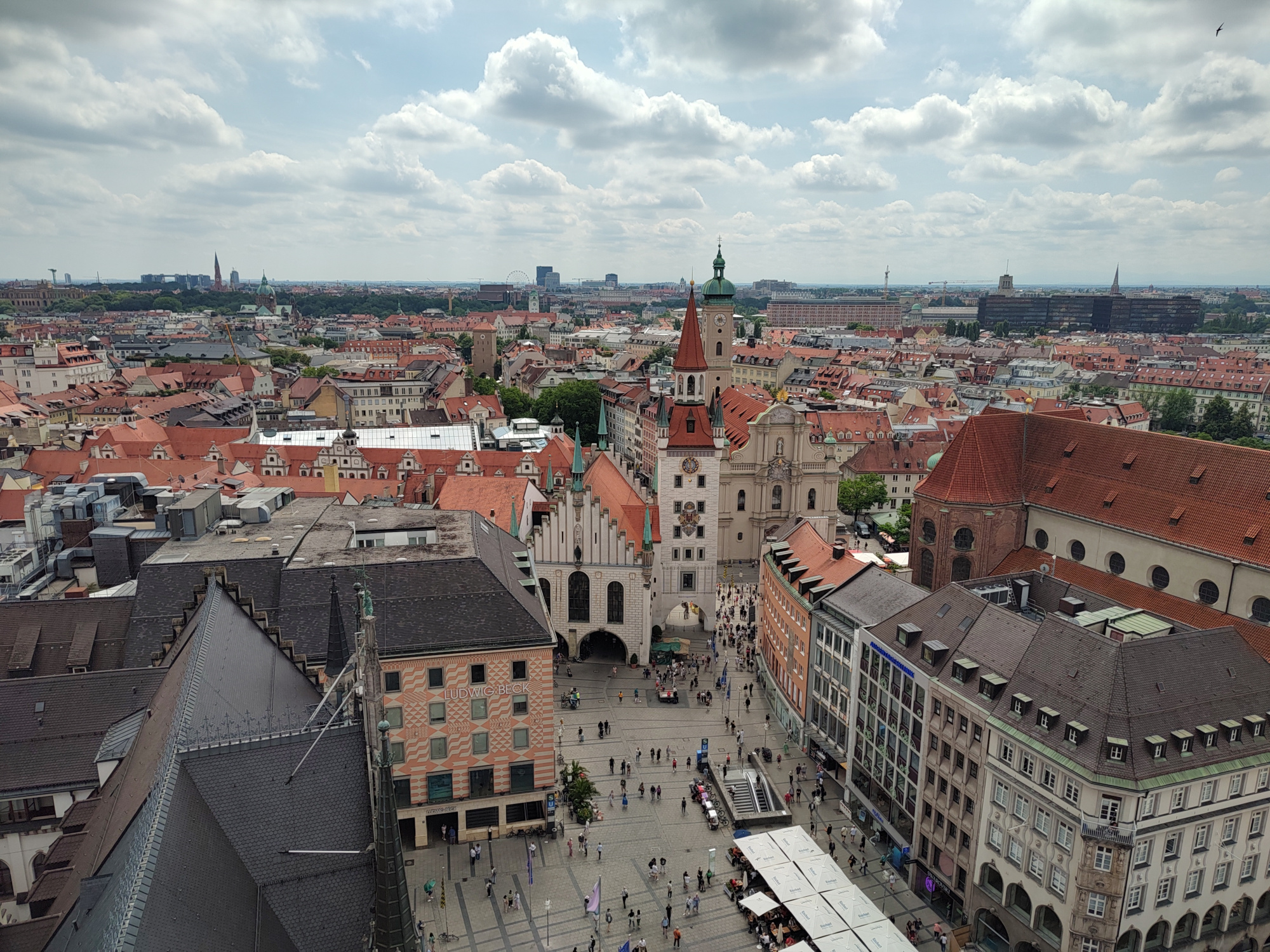
Start the morning off at the Café Glockenspiel on the 4th floor of the building across from the Rathaus in Marienplatz for a bite and a beautiful view.
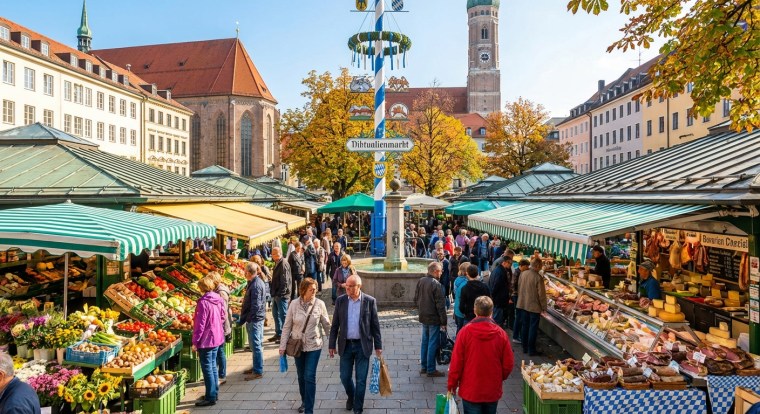
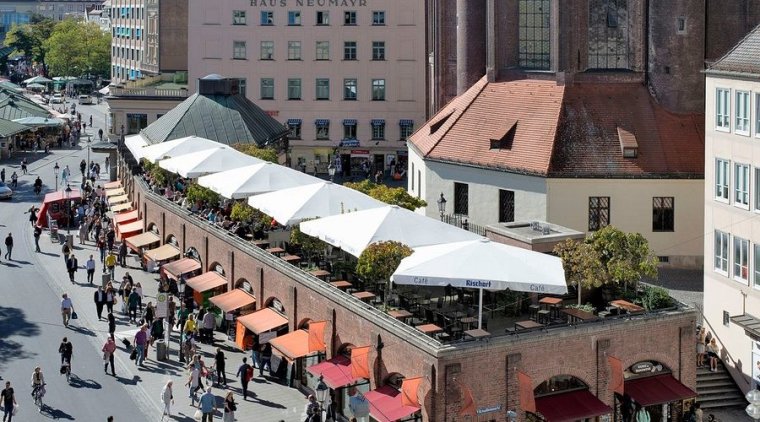
The key to Viktualienmarkt is not trying to do a giant meal. The best experience is a slow wandering lunch with little bites, a beer, and lots of standing around saying “okay THIS is the best thing so far.”
Start: Coffee + Pastry at Rischart. Grab a coffee and a fresh pastry to ease into the market.
Stop 2: Sausage Snack at Vinzenzmurr. Get a warm Leberkäse sandwich with mustard.
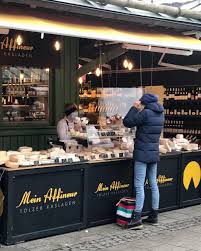
Stop 3: Cheese + Charcuterie Grazing at Tölzer Kasladen. Ask for a few small tastes.
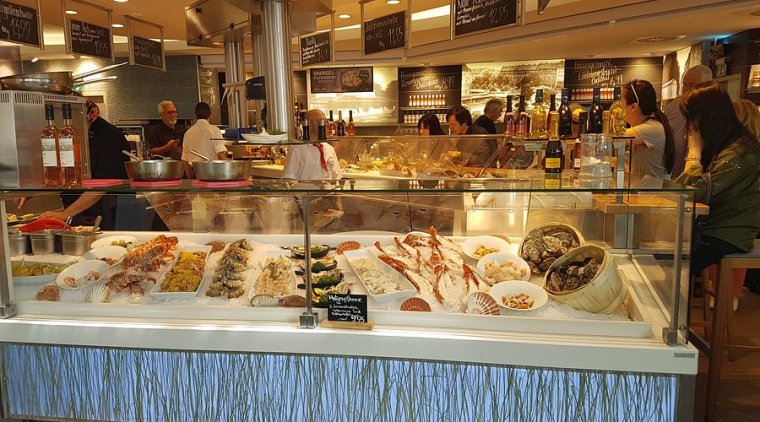
Stop 4: Seafood at Nordsee Viktualienmarkt Get: herring sandwich, smoked salmon, or shrimp rolls.
Stop 5: Weißwurst + Pretzel at Metzgerei Zimmermann. One of the classic butcher counters in the market. Order: Weißwurst, Sweet mustard & Pretzel
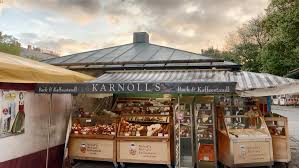
Stop 6: Coffee + Pastry at Rischart or Karnoll’s Backstandl. Grab a coffee and a fresh pastry to ease into the market.
Stop 7: Sweet Finish at Schmalznudel – Cafe Frischhut Just a few minutes from the market. One of Munich’s legendary pastry spots. Order Schmalznudel (a sugar-coated pancake), Rohrnudel or apple fritters with coffee.
Next some of us can head to Trachten Angermaier & Spieth & Wensky Tracht München for Dirndl shopping while others head to Altes Haukerhaus.
Take a quick peek at the beautiful facade of the Ruffinihaus:
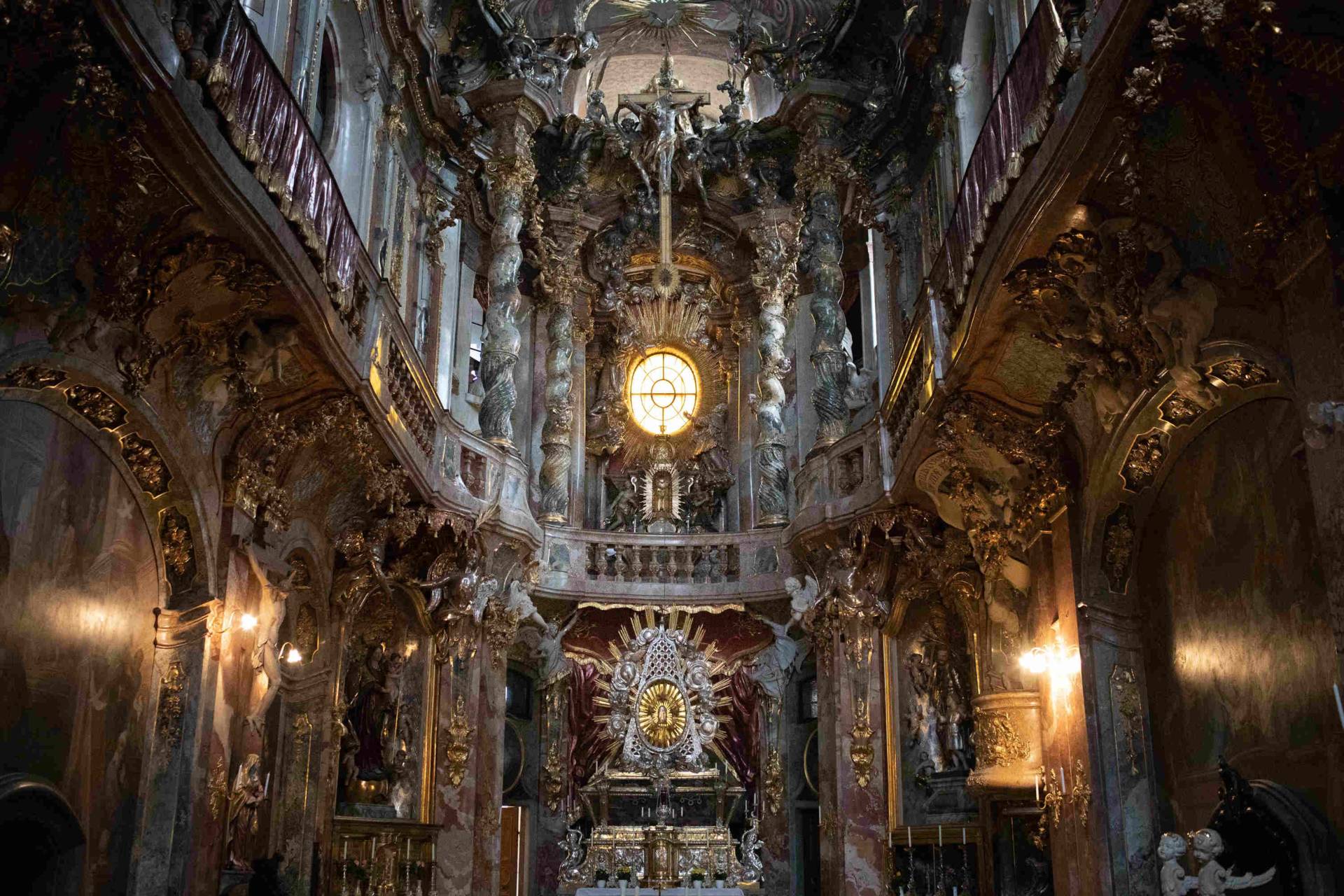
And our final main stop of the day is at Asam Church. Asamkirche is one of Munich’s most breathtaking hidden gems — a tiny Baroque church packed with dramatic gold decoration, elaborate frescoes, sculpted angels, and theatrical lighting effects. Built in the 1700s by the artist brothers Cosmas Damian and Egid Quirin Asam as their private chapel, the church feels incredibly intimate compared to Europe’s grand cathedrals, yet every inch is overflowing with detail and artistry. Stepping inside from the narrow street outside feels like discovering a secret jewel box in the middle of Munich’s Old Town.
And then we’ll make our way to Sendlinger Tor, one of the original city gates of Munich. Where we’ll take the light rail (Route 18) over to our dinner location.
Dinner at Paulaner am Nockherberg
Depending how steady we are, we could take the light rail back to our hotel on Route 18 (back to the same spot we got off the light rail before)
Day 3 – Munich
Starting out from the Hotel, today we walk to Karlsplatz and through one of the original city gates. and then along the Kaufingerstrasse.
From there, we’ll make our way to Brunch at Augustiner Klosterwirt – with a traditional Weißwurst, pretzel, sweet mustard, & Hefeweizen
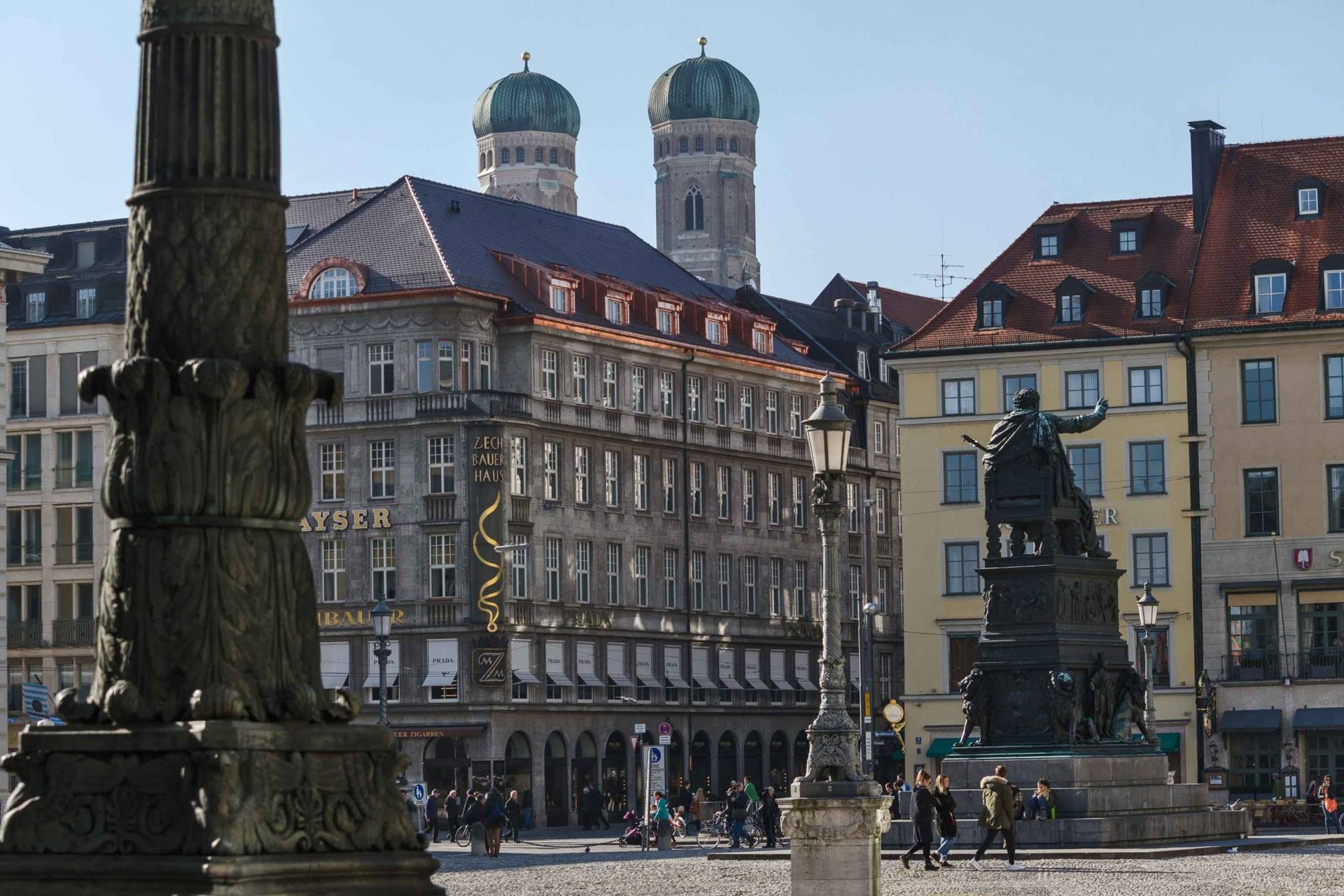
We’ll pass by the Frauenkirche and take a quick look inside Dallmayer Deli. Munich’s legendary gourmet food hall feels like a cross between an old-world European department store and a luxury culinary wonderland — overflowing with pastries, chocolates, cheeses, seafood, coffee, wine, and beautifully prepared deli foods. Open since the 1700s and just steps from Marienplatz, it’s one of the city’s classic food experiences and worth visiting even if you only have 15 minutes.
The best quick grabs are a few handmade pralines or chocolates, a few handmade pralines or chocolates, or a bag of Dallmayr coffee as a souvenir.
Max Joseph Platz
Theatine Church
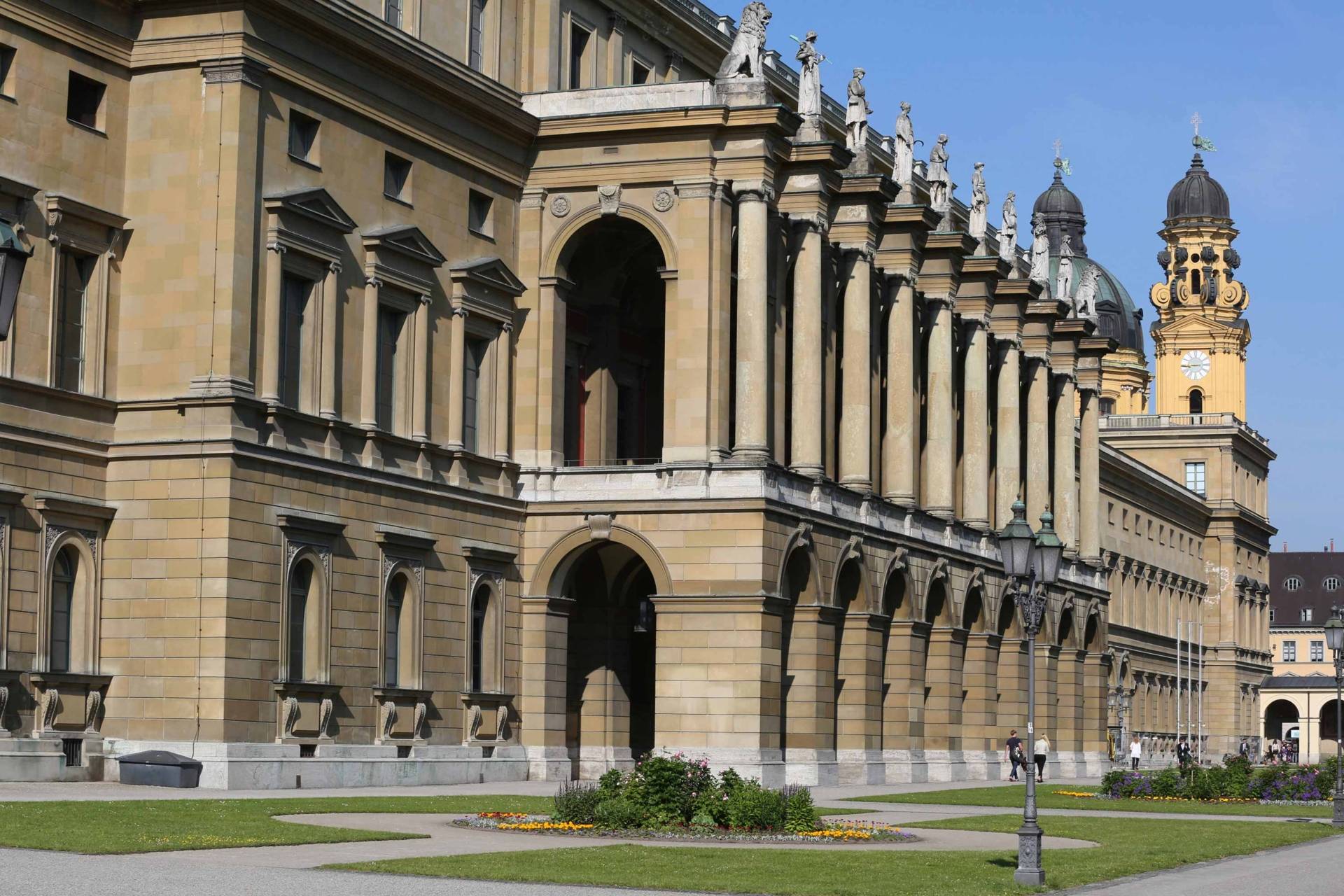
Residenz
Odeonsplatz
Maximilianstrasse
Platzl
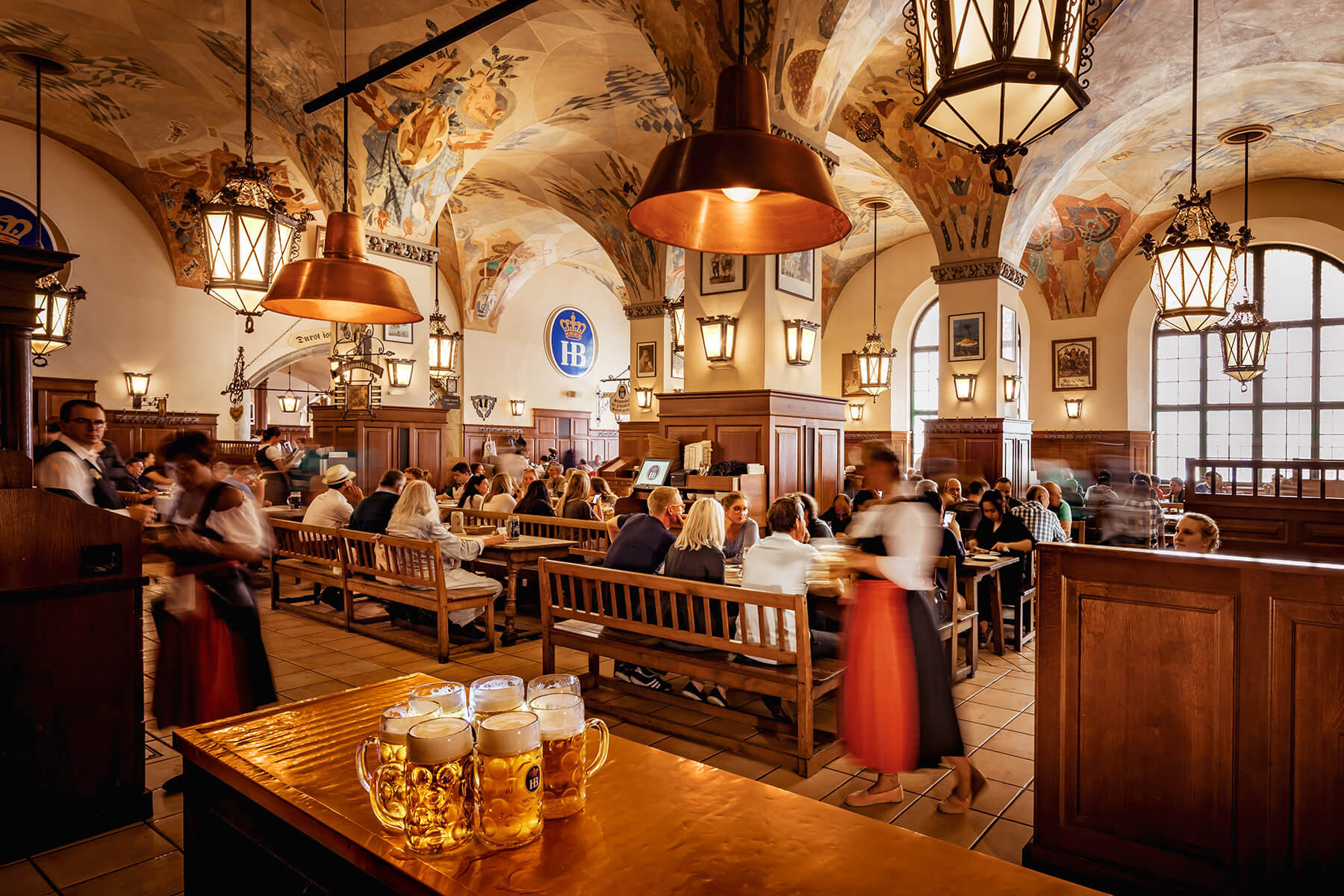
Dinner at Hofbrauhaus
Day 4
Munich
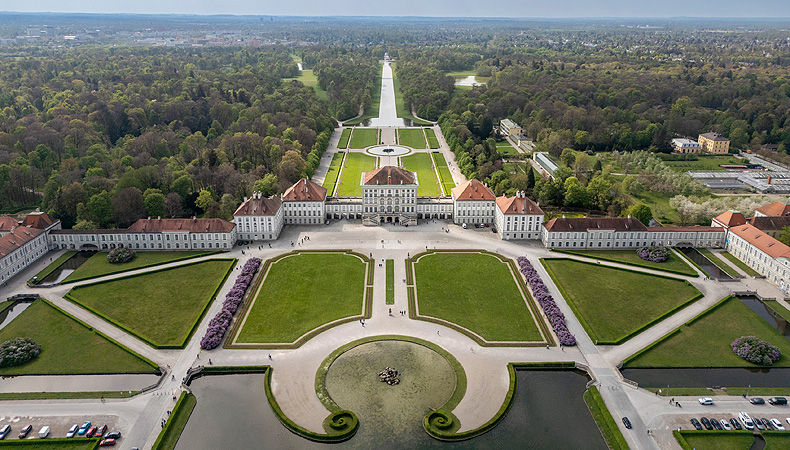
Today we are splitting our day into 2 parts. Morning visiting Nymphenburg Palace and the afternoon visiting the Englisher Garden.
Nymphenburg Palace is one of Munich’s most beautiful and relaxing royal sites, known as much for its enormous gardens and parkland as for the palace itself. Originally the summer residence of Bavarian rulers, it combines elegant Baroque and Rococo interiors — especially the stunning Great Hall — with canals, lakes, wooded walking paths, and smaller hidden pavilions scattered throughout the grounds. Unlike some of Europe’s more crowded palaces, Nymphenburg feels spacious and calm, making it ideal for a slower-paced half-day visit where you can tour the palace, wander the gardens, and stop for coffee, cake, or a Bavarian beer garden lunch nearby.
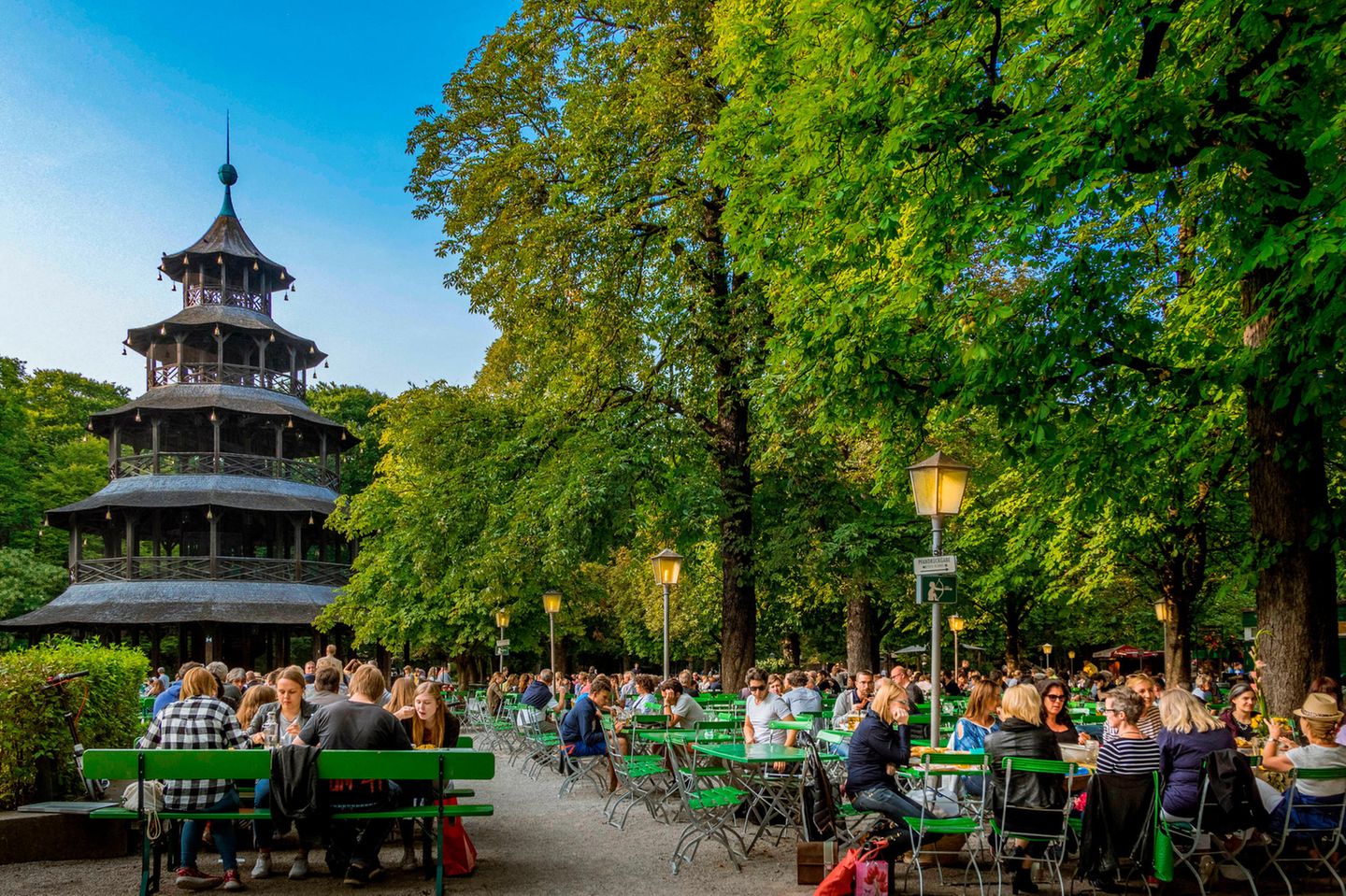
English Garden is one of the world’s largest urban parks and one of Munich’s best places to experience the city’s relaxed outdoor culture. Much more than just a park, it combines wide meadows, shaded walking paths, streams, beer gardens, and scenic gathering spots where locals picnic, bike, sunbathe, and socialize. Highlights include the famous river surfers at the Eisbach wave, the lakeside Japanese Tea House, and the iconic Chinesischer Turm beer garden. It’s the perfect place to slow down between sightseeing, enjoy a long stroll, or spend a few hours with food and drinks while soaking up the laid-back Bavarian atmosphere.
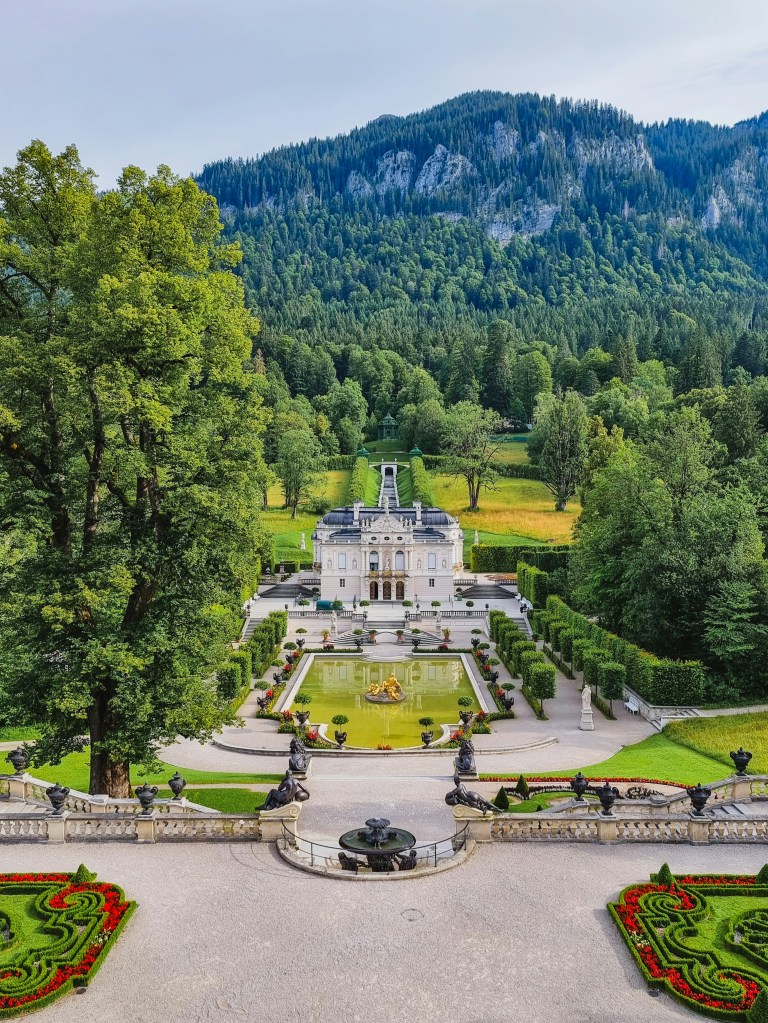
before heading to Fussen. We’ll check in at BW Hotel Fuessen – Augsburger Str. 18, 87629 Füssen, Germany
Baumkronenweg Walderlebniszentrum Füssen-Ziegelwies – walking bridges near Neuschwanstein
Day 6
Fussen, Germany
Day 7
Fussen, Germany to Salzburg, Austria
Most likely, we’ll stay at the Leonardo Boutique Hotel Salzburg Gablerbräu. A small hotel close to everything.
Today we’ll get picked up at our hotel in Salzburg for our journey back to Munich. But we aren’t through with our adventure yet. We are making a stop at Chiemsee and we’ll be taking a ferry to one of the islands on the lake, Fraueninsel.
Fraueninsel (also called Frauenchiemsee) is a small, inhabited island in Lake Chiemsee, Bavaria, Germany. Renowned for its serene scenery and historical sites, it hosts the ancient Benedictine convent Kloster Frauenwörth. The island blends monastic tradition, artistic heritage, and local craft, making it a notable cultural destination in southern Bavaria.
We’ll start out walking the Entire Island Loop (which takes about 30 min). Its completely flat and packed with flowers, tiny lanes and of course, lake views.
Next, we’ll head to Frauenworth Abbey and after checking out the grounds we’ll have a leasurely lunch at Inselbräu Frauenchiemsee. This is absolutely a “stay awhile” lunch.
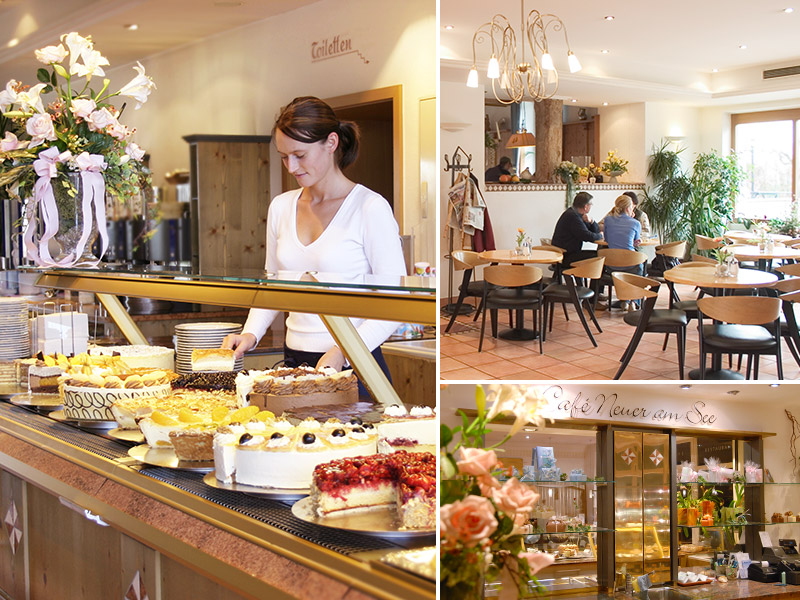
And then a stop at Konditorei Neuer am See for a Kaffee und Kuchen (coffee and cake) before we head to the Munich Airport Marriott Hotel.
For dinner we’ll switch things up with some Italian at L’Osteria Salzburg just across the street from our hotel.
Day 8 Salzburg, Austria
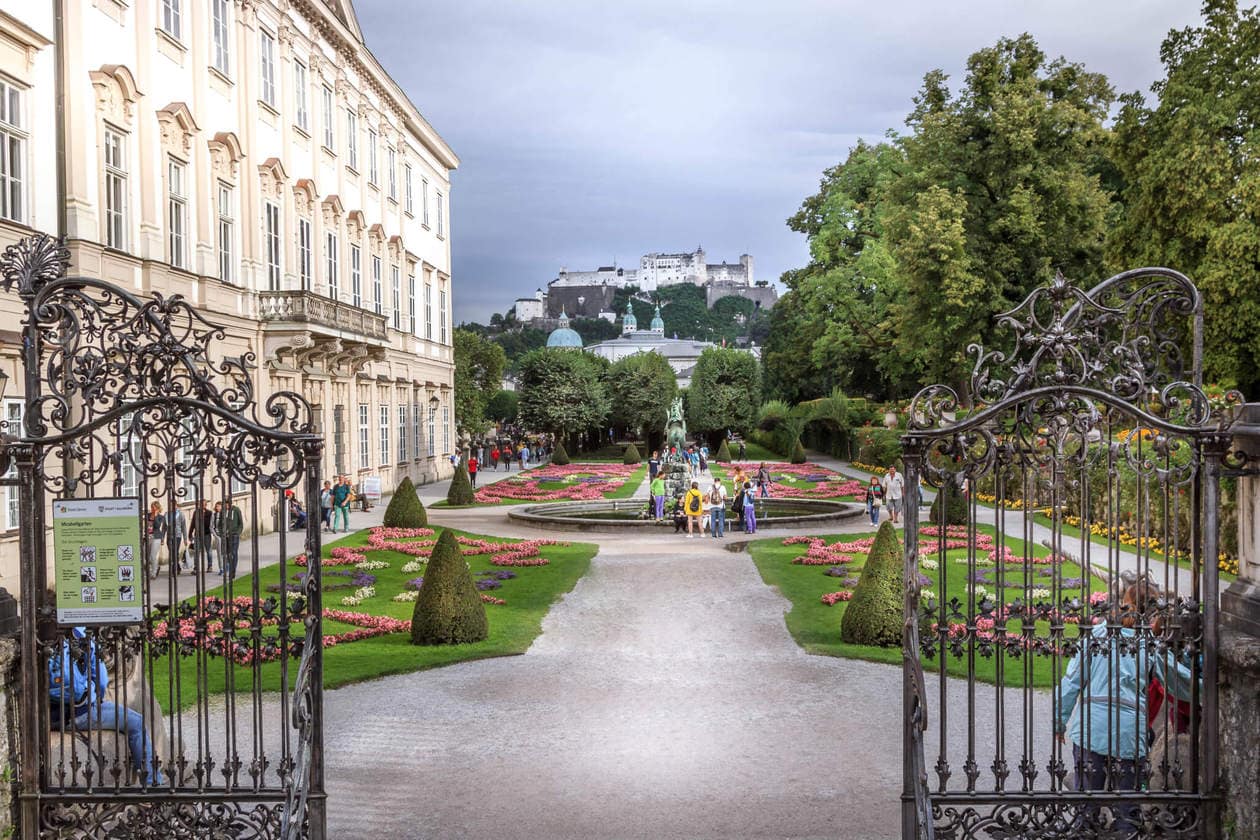
Today we’ll do our sightseeing in Salzburg, We’ll start out at Mirabell Gardens a short 3 min walk from our hotel.
After visiting the gardens, we’ll walk across the bridge and take a walking tour of Salzburg.
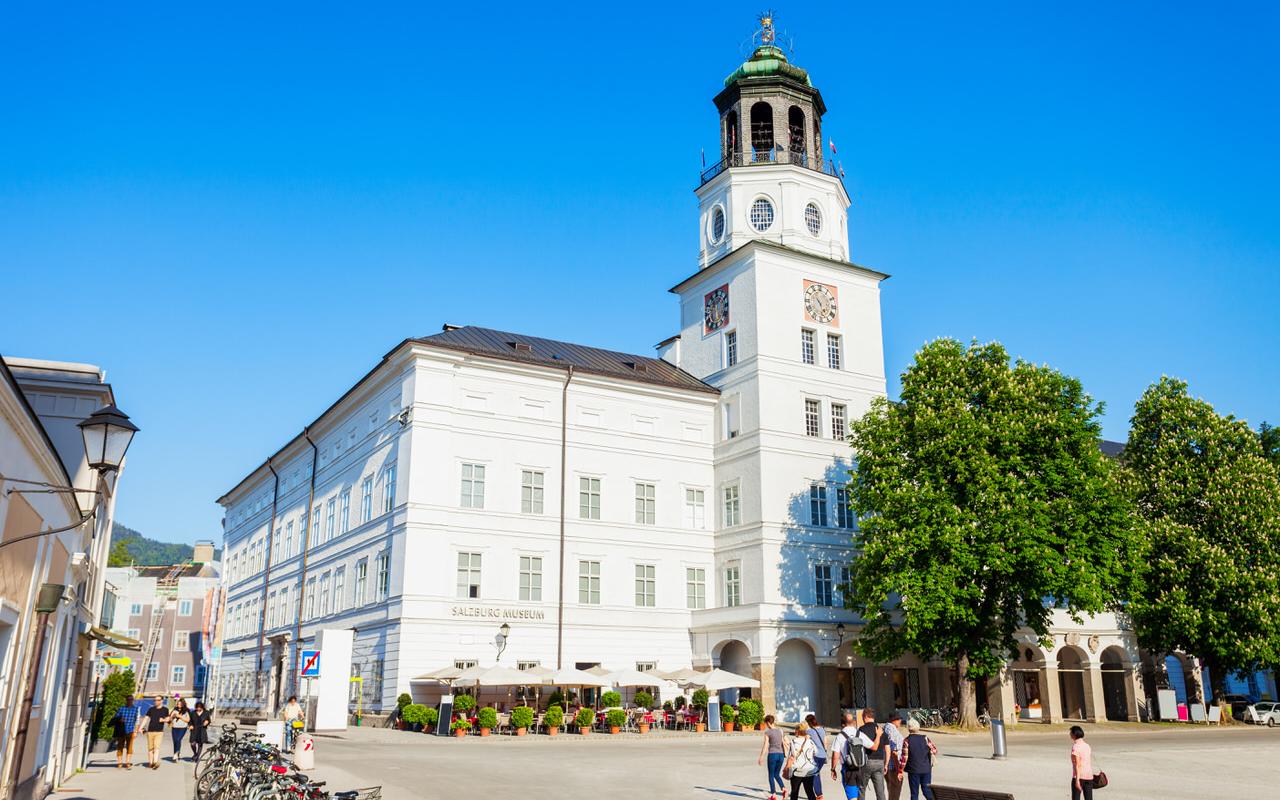
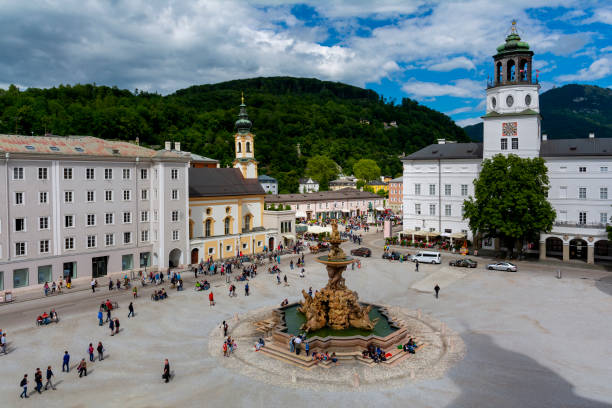
Starting with Mozartzplatz and the New Residence with the Glockenspeil
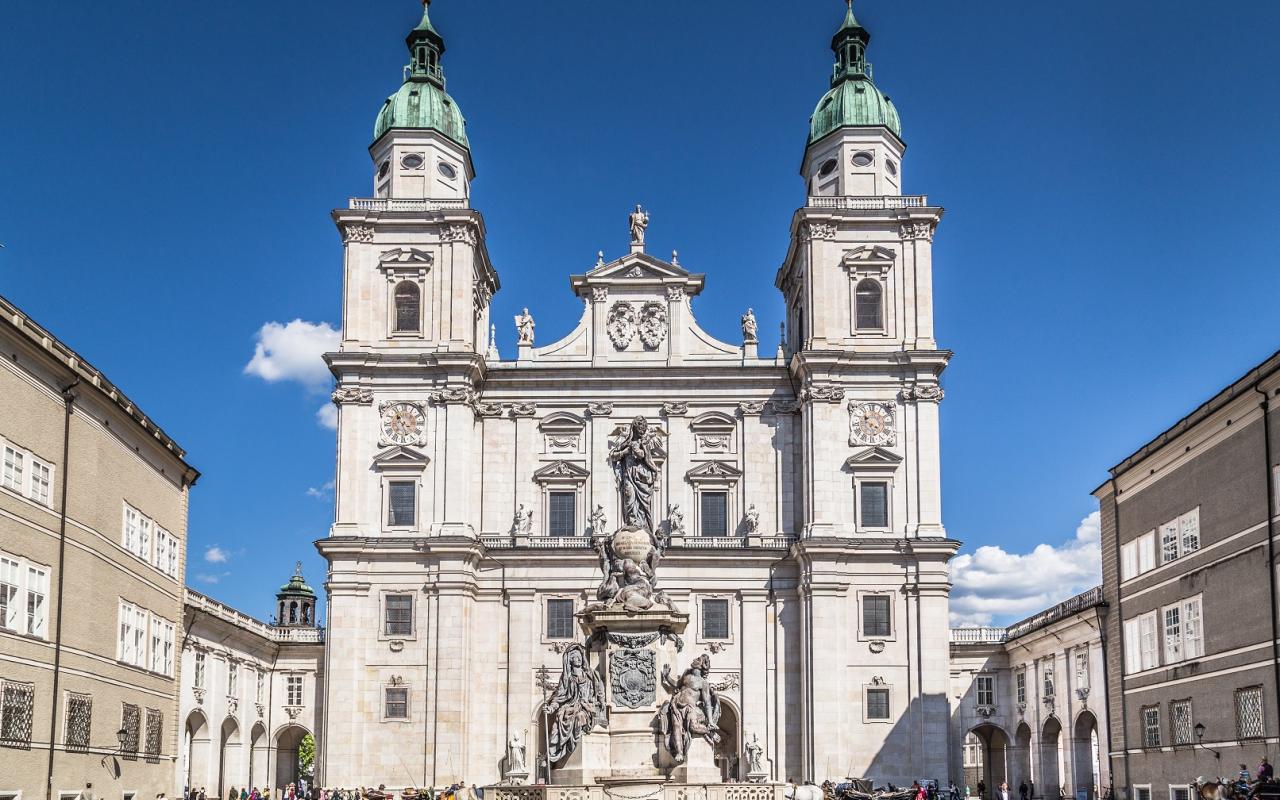
Salzburg Cathedral is the grand Baroque centerpiece of Salzburg’s Old Town and one of the city’s most important historic landmarks. Known for its massive dome, ornate interior, and beautiful marble façade, the cathedral dominates the scenic Domplatz square and reflects the wealth and power Salzburg held during the prince-archbishop era. Inside, visitors will find soaring ceilings, elaborate frescoes, and a calm, reverent atmosphere that contrasts beautifully with the lively streets outside.
Old Residenz
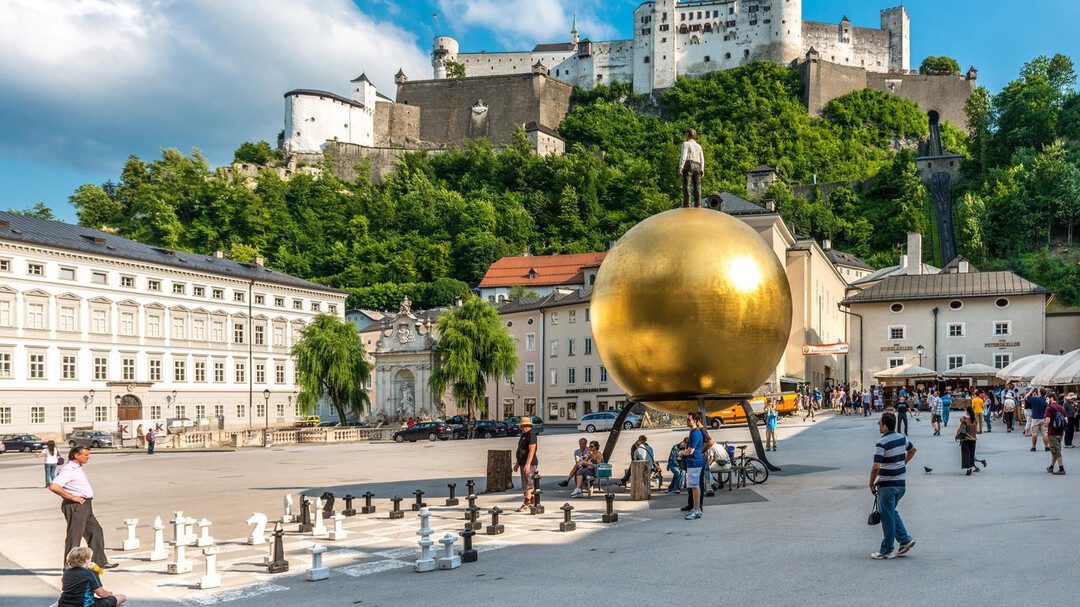
Kapitelplatz is one of Salzburg’s most scenic public squares, located just below Hohensalzburg Fortress in the heart of the Old Town. Surrounded by Baroque architecture and dramatic fortress views, the square serves as a lively gathering place filled with cafés, markets, street performers, and visitors taking in the atmosphere. It is especially known for its striking contrast between historic Salzburg and modern art, including the famous giant golden sphere sculpture, “Sphaera.” The open space and stunning backdrop make it one of the best places in the city to pause, soak up the scenery, and enjoy Salzburg’s unique blend of history and culture.
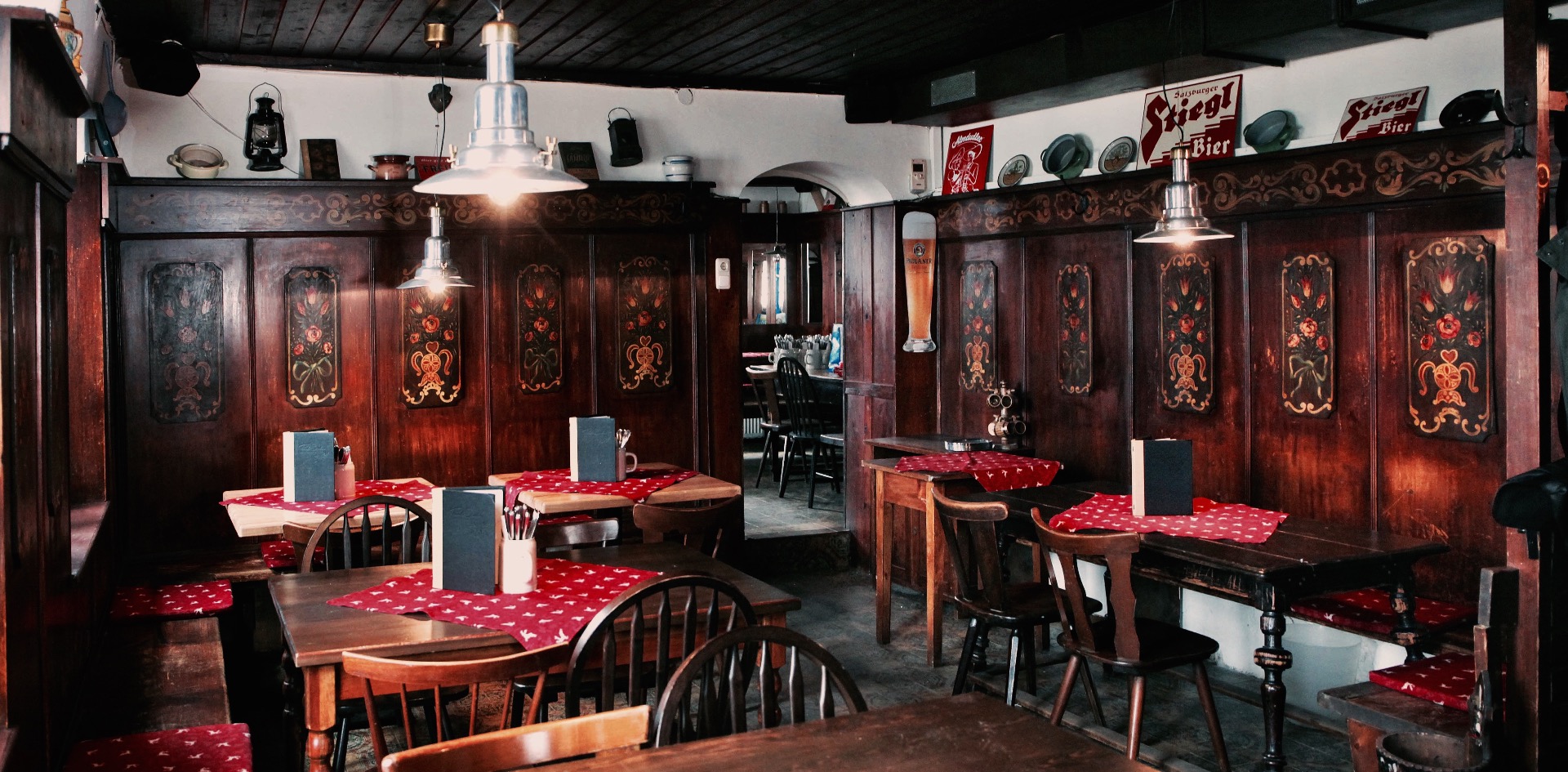
Lunch at Pauli Stubm
A quick stop at the Stiftsbäckerei St Peter – https://www.instagram.com/reels/DRb_tmdjafT/. Stiftsbäckerei St. Peter is a charming historic bakery next to St. Peter’s Abbey, known for its freshly baked breads, pastries, and simple, high-quality breakfast and snack options in one of Salzburg’s most atmospheric Old Town settings.
St. Peter’s Church is one of Salzburg’s oldest and most beautiful churches, known for its richly decorated Baroque interior, ornate altars, and peaceful cloistered atmosphere within the historic St. Peter’s Abbey complex.
St. Peter’s Cemetery is a remarkably atmospheric burial ground tucked against the cliffs of the Mönchsberg, famous for its ancient wrought-iron grave markers, flower-filled family crypts, and quiet, almost otherworldly beauty right in the heart of the Old Town
Toscanini Hof
Dinner at –
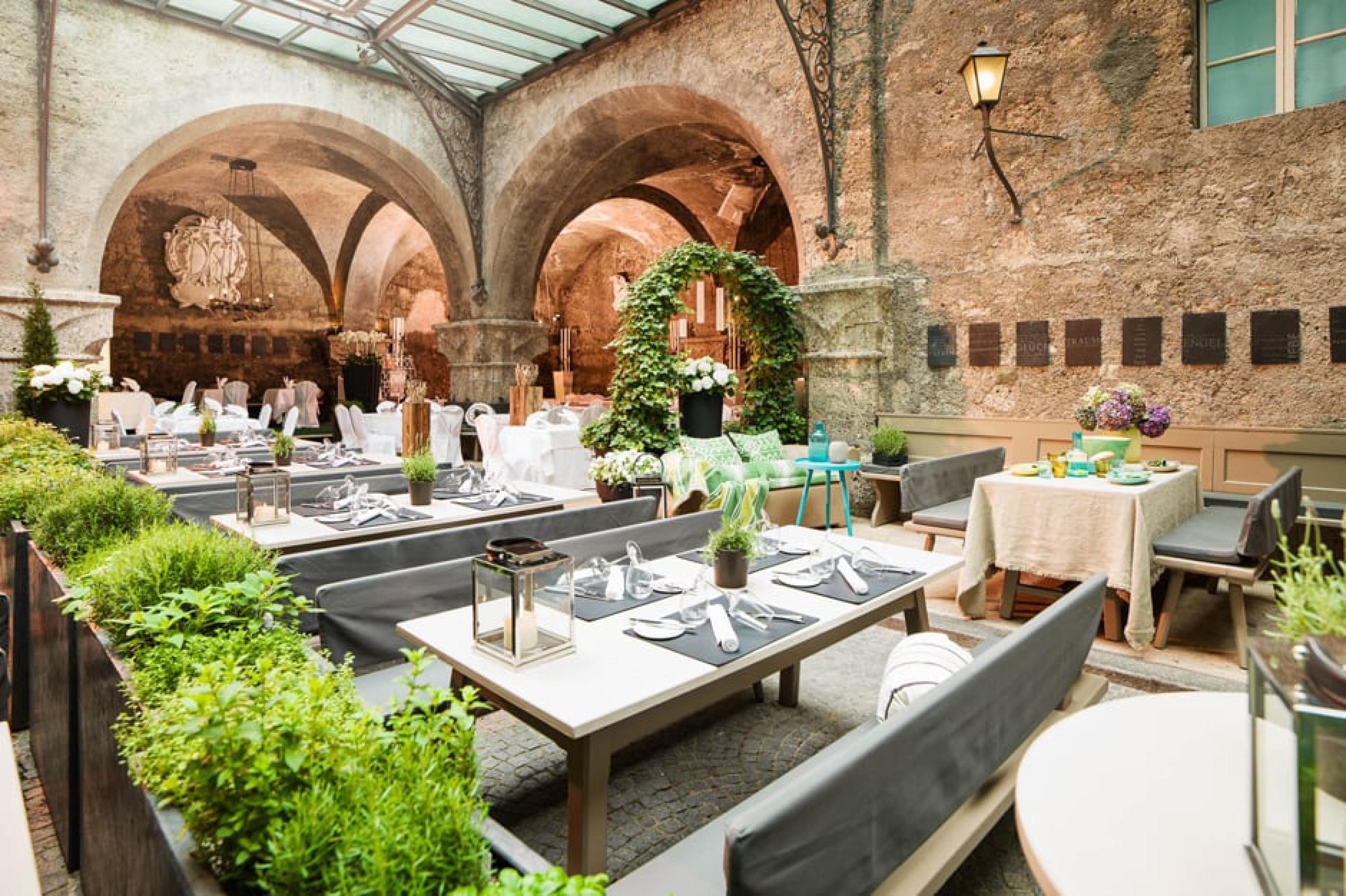
St. Peter Stiftskulinarium is one of Salzburg’s most iconic dining experiences and isone of the oldest restaurants in Europe. Located within the historic St. Peter’s Abbey complex in the heart of the Old Town, it combines elegant Austrian cuisine with centuries-old atmosphere, featuring beautiful stone dining rooms, candlelit spaces, and charming courtyard seating. Despite its historic pedigree, it feels warm and inviting rather than stuffy, making it an excellent place for a leisurely lunch or memorable dinner. The menu focuses on refined Austrian classics, local wines, and seasonal ingredients, and the setting makes the entire experience feel deeply connected to Salzburg’s history and culture.
Day 9
Day Trip to the Lake District
We’re doing our own custom tour of the lake district!
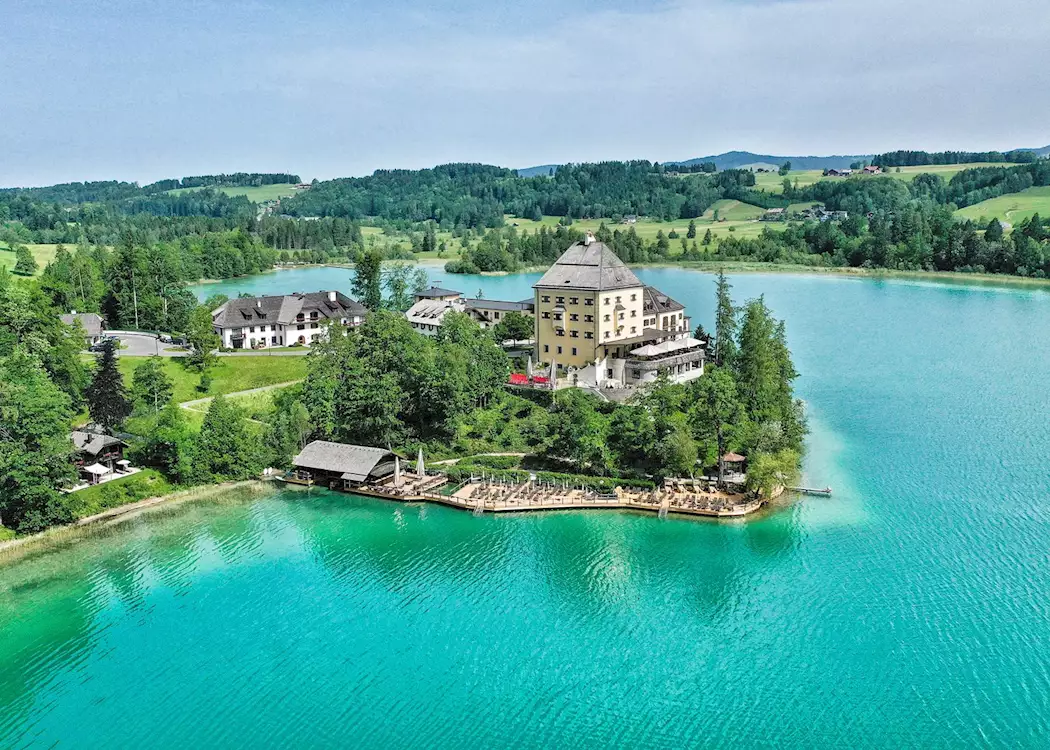
FUSCHL CASTLE
Morning Coffee & Cake
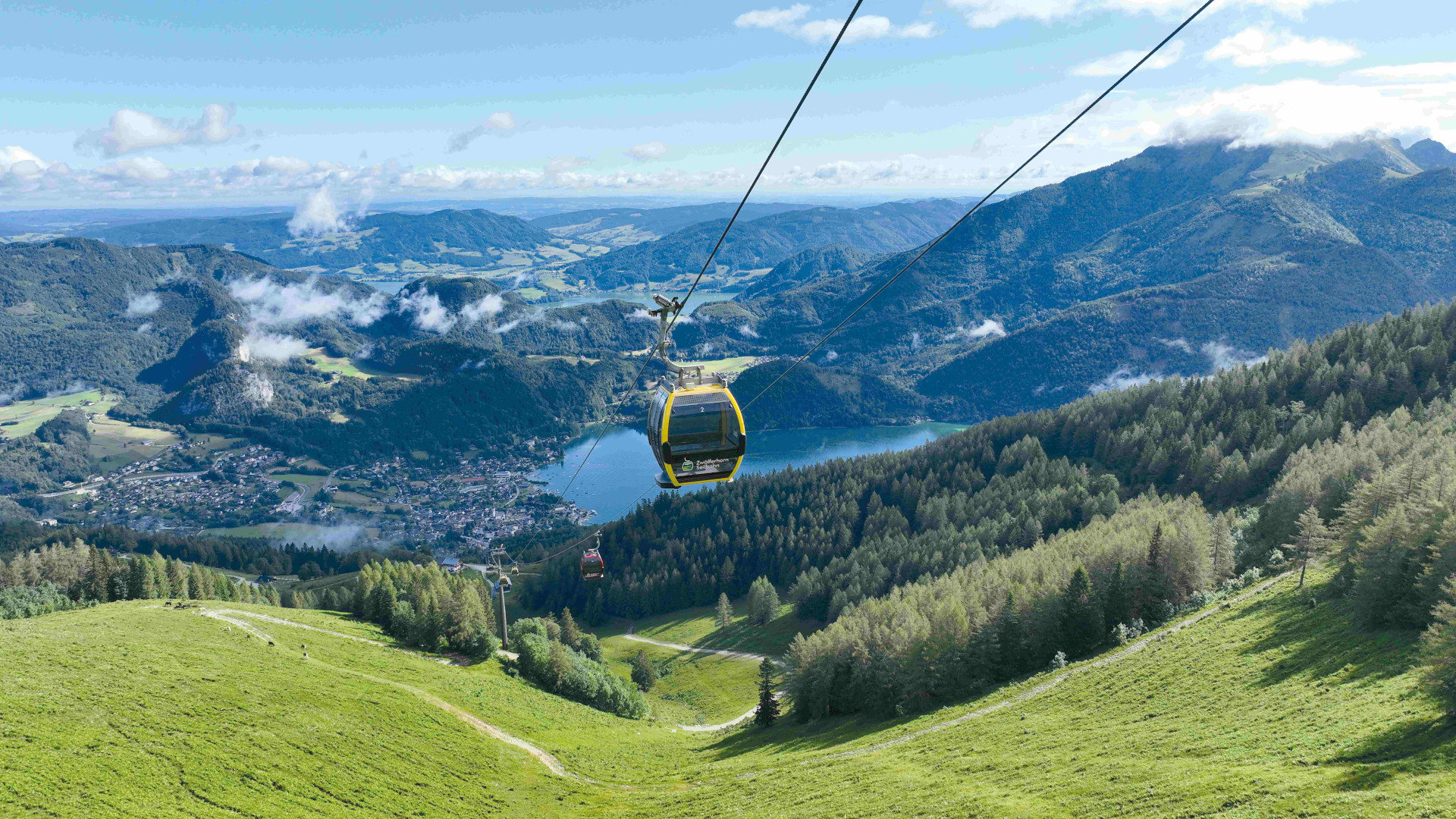
ZWOLFERHORN SEIBAHN
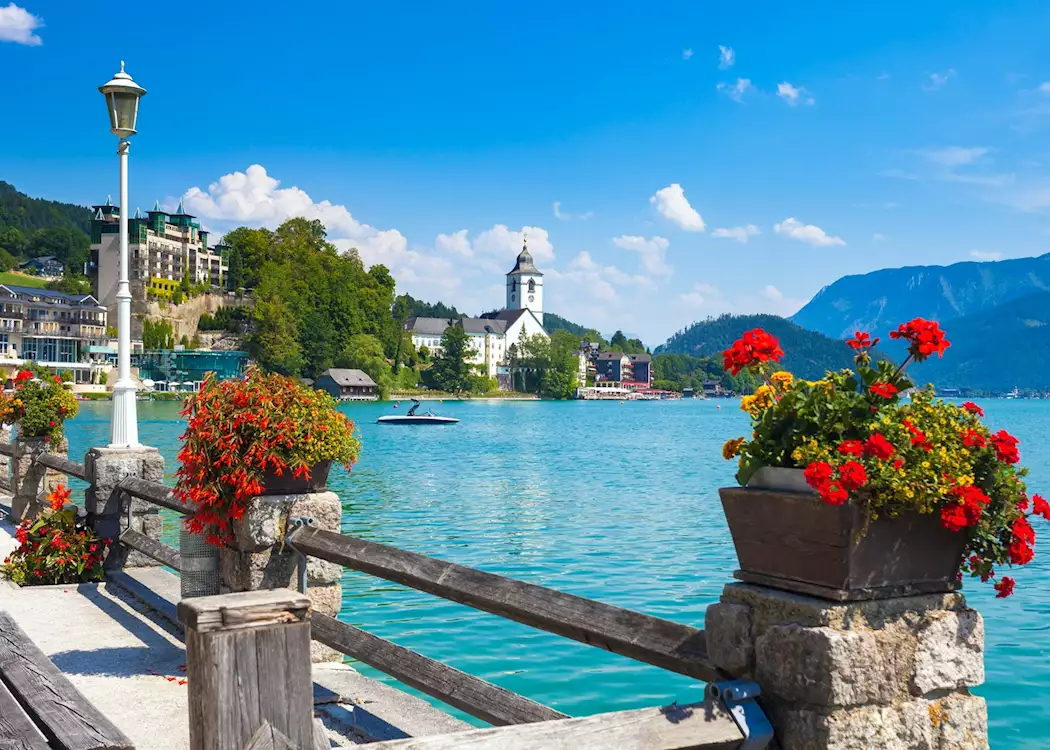
Lunch in St. Wolfgang at Seerestaurant Im Weissen Rössl
HALLSTATT
Later in the day when its a little less crowded
BAD ISCHL
Stop at Cafe-Restaurant Zauner for Coffee & Cake
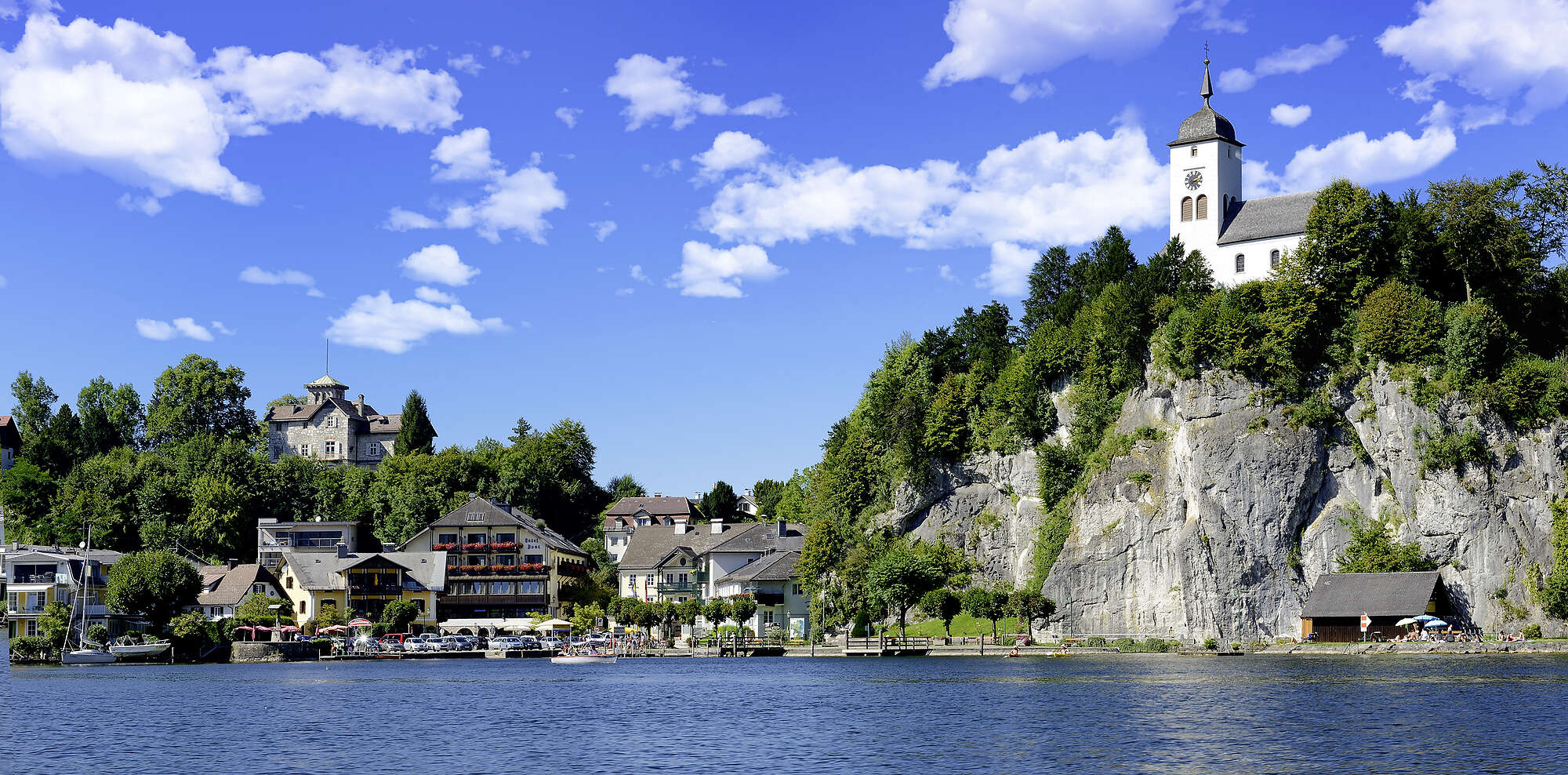
TRAUNKIRCHEN
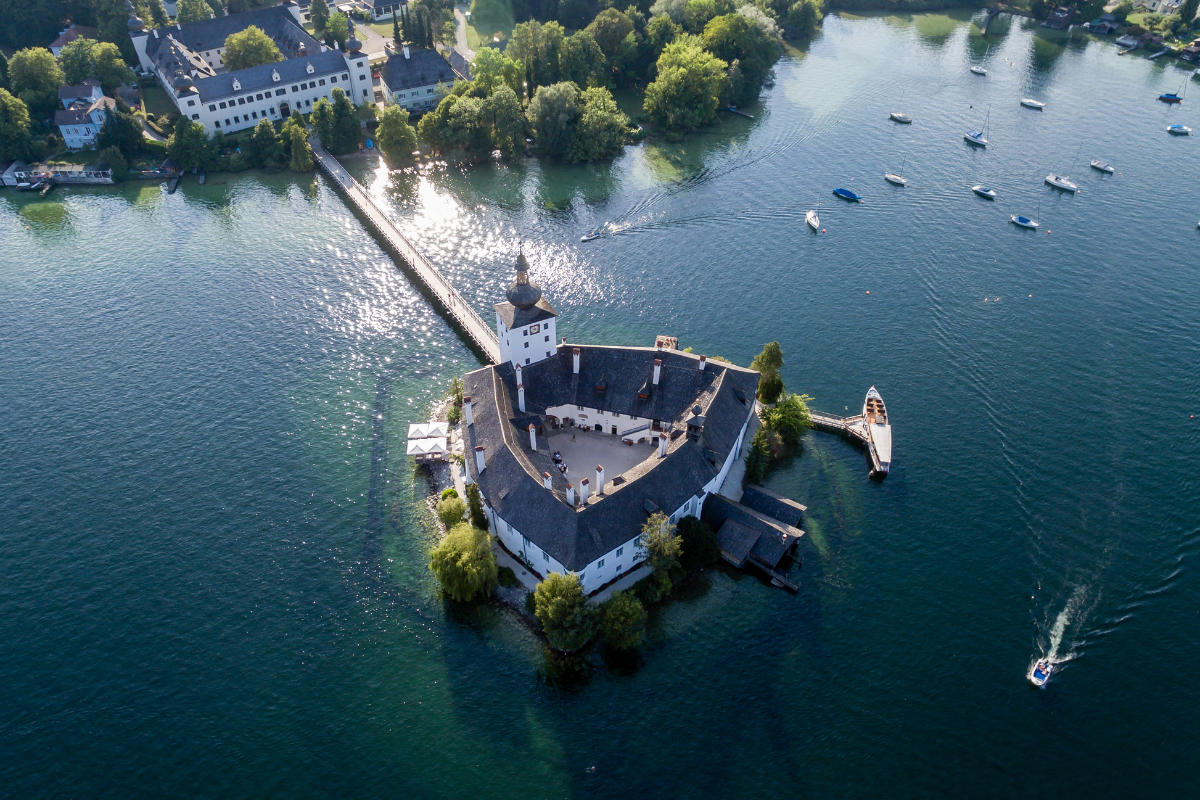
SCHLOSS ORT
Day 10
Salzburg, Austria
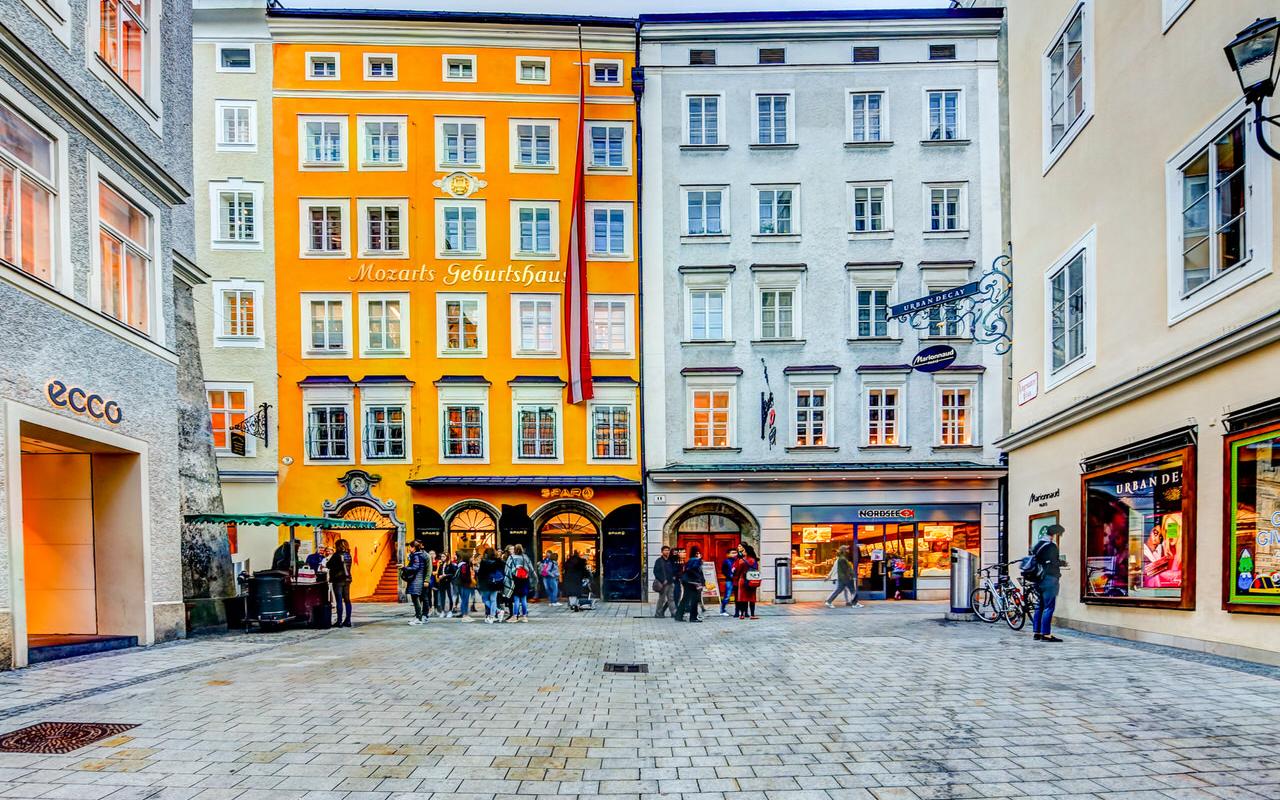
Mozart’s Birthplace
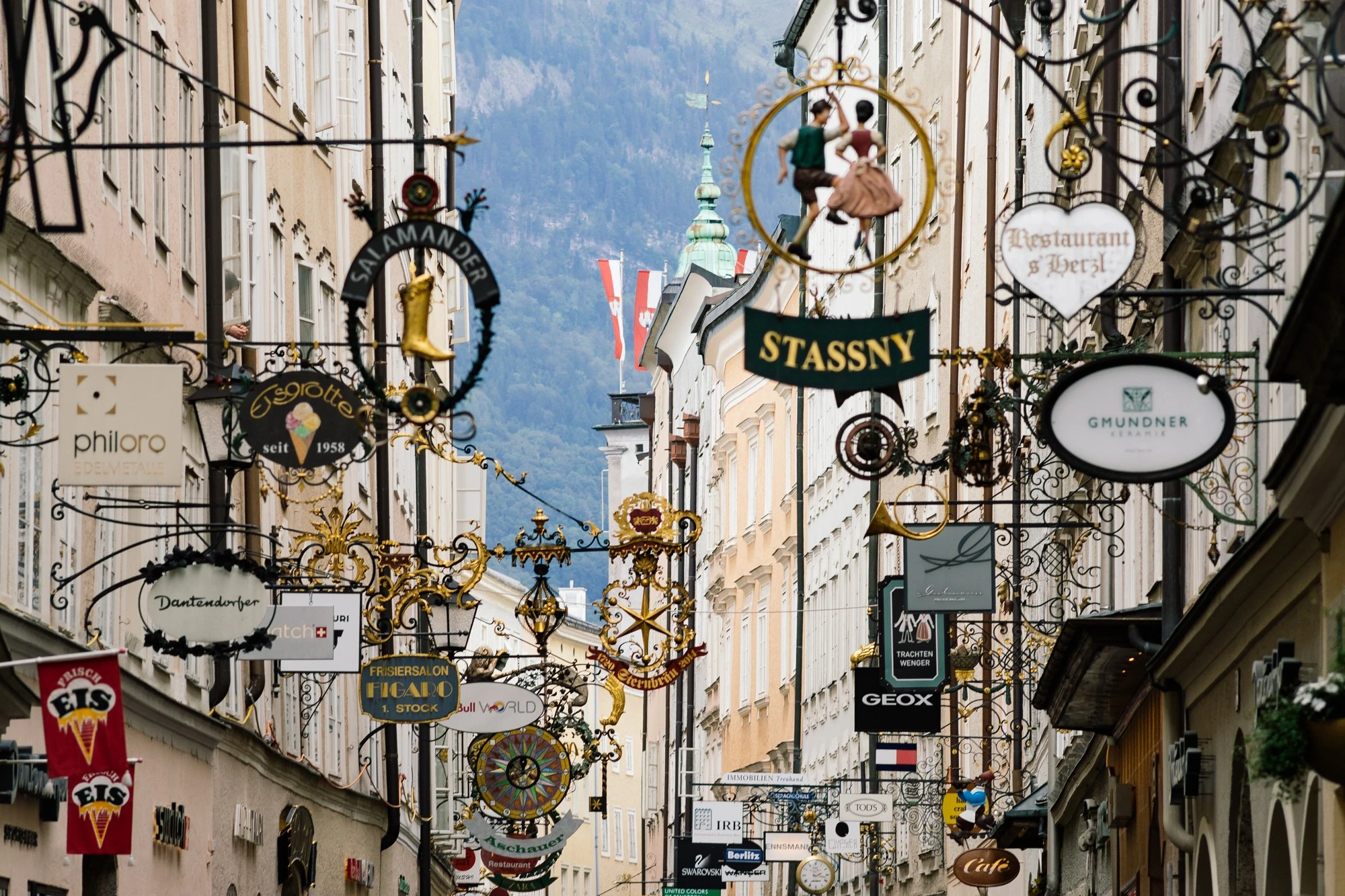
Getreidegasse
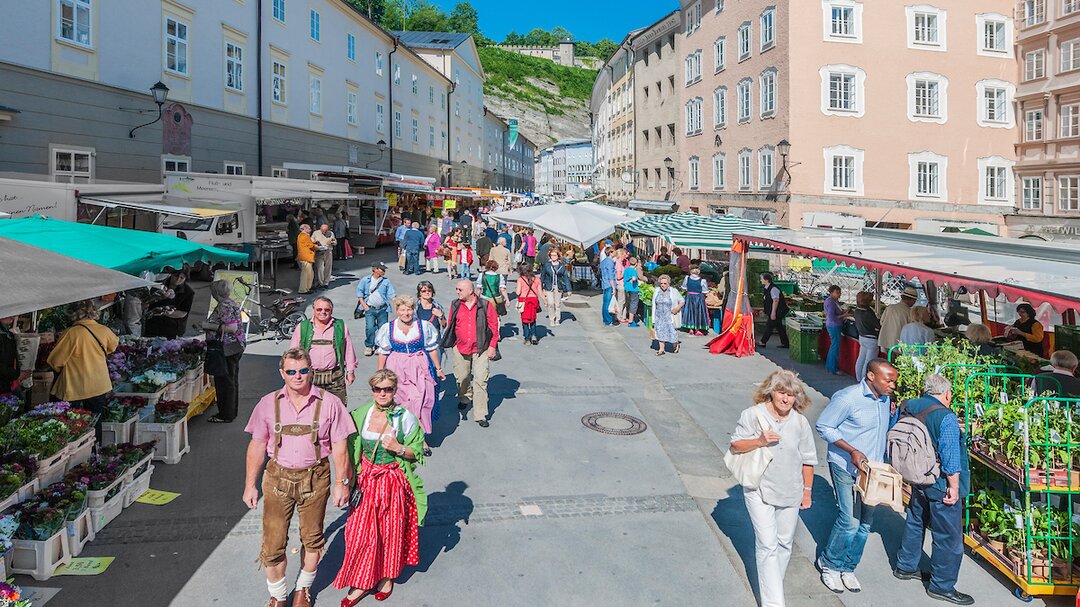
Universitatsplatz Market
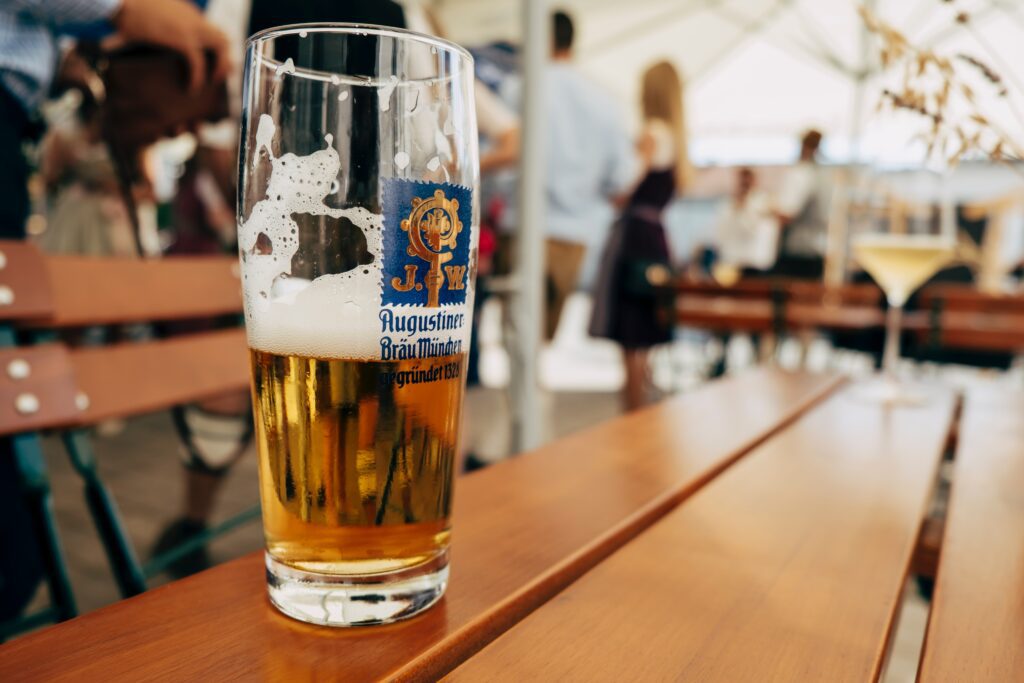
Dinner at Augustinerbräu Salzburg
Day 12
Salzburg, Austria – Chiemsee – Munich Airport
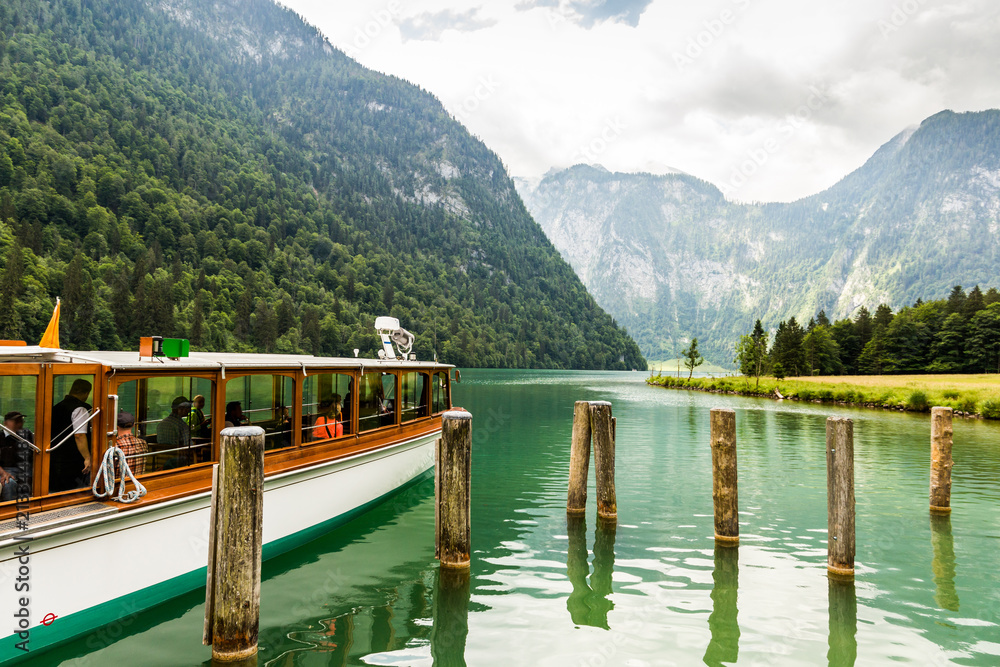
Today we transfer to Salzburg. On our way to Salzburg, we’ll stop at Konigsee and take a boat ride on the crystal clear glacier lake.
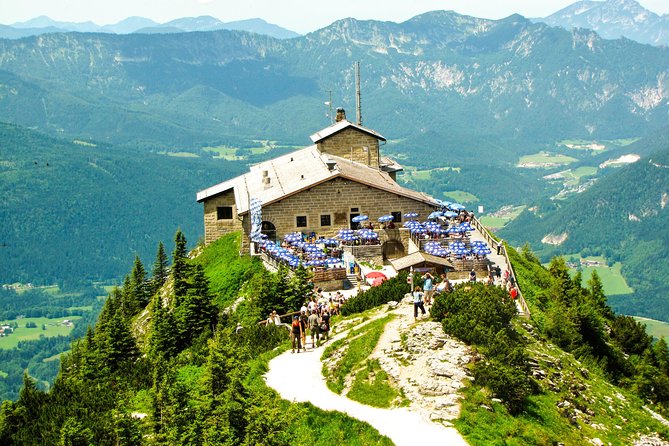
Then we’ll take a elevator up to the Eagles Nest a high spot overlooking the Austrian Alps.
And since at this point we will probably be exhausted, we can hit up the Restaurant Stub’n right in the hotel